Rechercher dans ce blog

Wednesday, January 5, 2022

Max Homa is ready to be known for more than just being golf's 'Twitter guy' - ESPN

SCOTTSDALE, Ariz. -- Max Homa was sitting on a plane, flying back to Arizona from the RSM Classic in Sea Island, Georgia, on Nov. 19, when he started to think about how to get better. It was his 31st birthday, and earlier in the day, he missed the cut by 3 strokes. Getting into his own head and dissecting his game on the way home has become standard operating procedure for Homa after tournaments he doesn't win.

As he flew cross-country, Homa wasn't just sitting 35,000 feet over the terra firma -- he started to look at his career from above.

Below, he saw a player who has three wins on the PGA Tour and is better known by some for his hilarious tweets. Perhaps more importantly, he saw a man who is finally in a good place physically and mentally.

Homa, who has 313,000 Twitter followers and has become a social media phenomenon for his witty humor, swing roasts and banter with friends and fellow pros like Joel Dahmen and Talor Gooch, didn't want to waste that progress.

He grew up thinking golfers hit their prime in their 30s, even though that notion has been challenged the past couple of years. Five of the seven most recent major winners were younger than 30, including a pair by 24-year-old Collin Morikawa. Homa watched them win, play in Ryder Cups, sit atop the Official World Golf Ranking and money lists. He was inspired to get to those heights himself.

This, Homa contemplated on that flight, was the time to push his limits to see how far it could go.

Last February, he won the Genesis Invitational at Riviera and was even handed the trophy by the tournament host -- Tiger Woods. Even though it was his third win on tour, before that moment, Homa didn't think he was good enough, didn't think he could do the whole professional golfer thing.

In 2017, he made just two cuts the entire season. Things got ugly. Dahmen remembered playing with Homa during a practice round before the AT&T Byron Nelson in 2017 and Homa didn't help on a single hole.

"He was shooting in the 80s, he couldn't keep the ball on earth," Dahmen said. "He was just lost. He was just a lost golfer."

Homa lost his tour card for the second time in three years after that season. The scar tissue of 2017 won't ever go away -- and he doesn't want it to. Still, the further Homa gets away from that year, in both time and success, the more he sees how much it meant, that he survived it and came out better on the other side.

"I know everyone has their lows and highs, but that was pretty dark as far as the golf game went," Homa said. "Hopefully I do cooler things in life, but in golf, I could win 10 majors in a row and I'd be the most proud of battling through that year, and coming out in 2018 a better player and, I guess, a tougher person.

"I just like couldn't be more proud of that."

Now Homa, who will start his 2022 at the Sentry Tournament of Champions, which is reserved for those who won the year before, wants more.

"Maybe it's a midlife crisis," Homa said with a laugh. "I was just thinking, 'Man, I don't want to think back in five years that I had a chance to make the Presidents Cup team and maybe a Ryder Cup a year later, or maybe win a major, and I kind of got happy with where I was in golf.'"

Homa got off the plane in Arizona with a plan.

He took a couple of days off and then started his new workout routine, which was set up by his new trainer, Kolby Tullier, who works with pros Justin Thomas and Gooch. The plan had him waking up between 5-5:30 a.m. to get his gym sessions done by time the sun came up in Scottsdale around 7:30 a.m. That left him an entire day of sunlight to practice, walk his dogs and hang out with his wife, Lacey. Old videos of Kobe Bryant helped lay a foundation for Homa's days. Like Bryant would, Homa works out in two-hour increments.

One Friday night last fall, while out with Dahmen, Homa said he was cutting his night short after a couple of beers because he had something going on the next day. So Dahmen asked: What, exactly, did he have planned for early on a Saturday morning?

It was a gym session followed by a little practice.

The old Homa, Dahmen said, would've kept going and had "a lot more beers."

"I was like, 'Damn, like that's pretty good because, typically, I can talk him into a lot of things. But he was pretty focused on what he had to get done the next day and he was going to do it," Dahmen said. "He's always been dedicated, but I think he's even more focused now."

Homa wants to prove that he's more than a former NCAA individual champion, more than just a three-time winner on tour.

He also wants to prove he's more than a Twitter sensation.

"I definitely feel like in the last year or so I probably shouldn't continue to be looked at as a 'Twitter guy' -- but I guess that's just what it is," Homa said. "I don't mind it. It's been really cool meeting and kind of engaging with a lot of people who are in the golf world and who watch golf and just fans of the game.

"So, it's cool to be a part of that. At the same time, it's like it's just not exactly what I'm going for. It just kind of fell in my lap."


HOMA STILL REMEMBERS his first viral tweet.

It happened on March 26, 2016, when he tweeted about former Kansas basketball star Perry Ellis.

"That was the first one where like, I put my phone down and picked it back up and I was like, 'Holy hell, there's a lot of interaction with this,'" Homa said. "And it was the first one where I was like, 'Man, that's a dumb thing I just said.' Then it got some run."

That was just the beginning.

One of the most common questions that Homa gets is how long does it take him to come up with a tweet? They just pop into his head. When that happens, though, he workshops them until they're perfect.

"We kind of see him analyze a tweet, and then he'll type it, he'll save it, he'll delete it, he'll edit it," said Peter Pappageorge, one of Homa's closest friends. "He'll grind at some of these tweets, which, nowadays, you kind of have to. You have to think it through."

But who Homa is on Twitter is who he is offline, Pappageorge said.

Homa's tweets are typically an extension of his group chats.

"There's no depth to my brain," he said. "It's incredibly, incredibly unremarkable, but it will be funny in very short stints."

He summed it up like this: "My mind moves a million miles a minute."

Homa realized during his first or second year on the tour that he was actually starting to get a following when another player repeated a joke he tweeted back to him.

Some of Homa's best friends are on tour. The group includes Dahmen, Dahmen's caddie, Geno Bonnalie, another caddie, Aaron Fleenor and Gooch. Homa calls them the Tour's "hipsters." They tweet at each other -- and even with each other. Homa and Dahmen have tweeted to each other while sitting across the table at dinner. It's usually fueled by beer, Dahmen said, but both think it's funny.

Homa feels like he has too many Twitter followers for the level of his golf game. He's trying to even the scales. Still, it annoys him when the TV broadcasts refer to him as the "Twitter guy."

"I don't know how many people won multiple times in 2021? But I don't think it was a lot. So it's kind of tilting at times, but it's not a bad thing. It's good to be known for something outside of golf.

"I would trade my Twitter in a heartbeat for anything in golf. Like in the back of my mind, I want people to know me as the guy who's really damn good at golf and works really hard, because that's who I actually am. I don't take pride in my Twitter. I take pride in what I do on a daily basis to get better at golf."

Homa has become known for roasting swings on Twitter. And he'll roast anyone -- from the famous to the anonymous. Not even little kids are safe.

"That's the wildest thing of all time," he said. "It shows me the beauty of golf, that just everybody loves golf and everybody wants to get better. We all want to look like Adam Scott -- and none of us do."

Homa estimates he's done a few hundred swing roasts.

"Some of the stuff that he would come up with, I was like, 'How did you come up with this?'" Dahmen said. "Like, how did your mind go into that? Like, how are you that witty with just this little 10-second clip of golf? And how could you do so many of them and keep them original -- different videos and stuff like that -- instead of repeating the same stuff all the time?"

For all the good that's come from Twitter for Homa, he's also dealt with its ugly side.

In 2017, when he was playing poorly, people piled on.

"I was already upset and I was already struggling," Homa said. "I was already in a pretty low spot without any social media and now I'm just kind of adding to it."

He's taken social media breaks before, sometimes as long as two weeks. He took one after the PGA Championship last summer for 48 hours, not wanting to read about himself, the course or the tournament because he was so frustrated. (He shot 78-76 at Kiawah Island and missed the cut in an event that 50-year-old Phil Mickelson went on to win.)

Another time, he had his wife change his password for him so he couldn't get on. One time his sister told him she cries when she reads some of the things people say about him.

Among all the praise and positive tweets after a round, there's bound to be one that tells Homa he sucks. That's the one he would lock into.

"I'll sit there and look at it and I think to myself, 'I'm using that as motivation not to suck next time and rub it in the guy's face," Homa said. "But is that healthy? Because who is that person? That person is a sad person."

Now, though, Homa has finally embraced the mute button on Twitter.


PART OF HOMA'S journey has been a reassessment of his mental game.

The old Homa was in his own bubble on the course. He critically judged every shot he took. He didn't like that.

"I always wanted it to change a bit because I was kind of tired of being like a sourpuss at times, I guess, about how I'm playing," Homa said. "It should not affect your life so much every time you hit a golf ball. It just shouldn't."

Homa started reading books about mental health and leaned on his wife, his caddie, Joe Greiner, and friends to talk through it. Now when he starts to get frustrated, he tries to break down what's causing it.

His goal is true happiness, not fake happiness. To Homa, true happiness means a bogey won't mess him up.

"There's like almost no reason to get mad," Homa said. "I've never seen a benefit of getting mad. I do it all the time, but I never see a benefit of it later. It's not like it spurs you along. You just get pissed off."

Homa won the Fortinet Championship in Napa in September. This came right after he was not selected for the Ryder Cup team, which would have been a stretch considering he was on the bubble until the summer but then fell off the pace in the points race. But he was in consideration, to the point where he was fitted for the Ryder Cup uniform at the PGA Championship and was part of the text messages and emails from captain Steve Stricker.

"I guess it's just like knowing that you can," he said. "I've realized this past year that I can make that scene. I guess before I didn't know if I could."

He feels the same way about majors.

Homa has made just two cuts in eight appearances at majors. He was only around for the weekend at The Open in 2021, finishing in a tie for 40th.

"I guess it's experience," Homa said. "I haven't played in a ton of them. I feel like this coming season, I'm going to feel a lot less out of my comfort zone at them."

Homa feels more solidified in his golf than he ever has. That, like winning, was once foreign to him.

After that plane ride in November, Homa made what could end up being a career-changing, career-defining decision: He didn't want to be content with last season. He wants more wins. He wants to be top 10 in the world, even rise to No. 1. He wants to be on the Ryder Cup team. He wants to win majors.

"To see him struggle the first couple years of professional was ... I can't imagine how hard it was for him," Dahmen said. "But everyone was kind of like waiting for this Max Homa guy to break through."

Adblock test (Why?)


Max Homa is ready to be known for more than just being golf's 'Twitter guy' - ESPN
Read More

Minimizing ‘social disruption’: Why B.C. isn’t implementing more COVID-19 restrictions - Global News

As other provinces move to partial or total lockdowns due to surging cases of COVID-19, B.C. health officials confirm additional restrictions won’t be implemented for the moment.

It’s about “minimizing social disruption,” Dr. Bonnie Henry said Tuesday in the province’s first pandemic briefing of the new year.

“Case and contact tracing are no longer reactionary measures that are able to work to help us contain this,” she said.

“It means that all of us have to be proactive in how we prevent ourselves from getting sick but also how we prevent transmission for others.”

Read more: ‘In the tug-of-war, Omicron has the advantage’: B.C. enters new stage of the pandemic

Omicron is now the dominant strain of COVID-19 in B.C., representing more than 80 per cent of all cases, the provincial health officer confirmed.

Henry warned businesses to expect up to a third of their employees to become infected in the latest wave of the pandemic, and said the onus will be on them to implement rigorous safety plans.

“I do think it is over to the sector now, it’s not me who can order these,” she said.

“From the very beginning, public health orders are there as a last resort, when we want to make sure people are absolutely doing them, and we want to do it in what we call the least restrictive means.”

Click to play video: 'COVID-19: B.C. health officials say it is likely most residents will become sick with Omicron' COVID-19: B.C. health officials say it is likely most residents will become sick with Omicron
COVID-19: B.C. health officials say it is likely most residents will become sick with Omicron

It’s a shift in the province’s approach to the pandemic — relying on British Columbians to “default to less not more during this risk period.”

Meanwhile, Ontario has banned indoor dining, shuttered schools until Jan. 17, restricted indoor gatherings to five people and outdoor gatherings to 10.

Quebec has implemented its second curfew of the pandemic.

Read more: B.C. school districts prepare for ‘functional closures,’ online classes amid COVID-19 surge

In December, B.C. announced a delay of one week in the start of the school year for most students to give staff more time to prepare safety plans.

The province’s current set of public health restrictions will be in place until Jan. 18 at the earliest.

Henry said she has put in place the orders that are necessary to curb the spread, but the rest — including distancing, masking and cutting down on the social calendar — will be up to British Columbians.

© 2022 Global News, a division of Corus Entertainment Inc.

Adblock test (Why?)


Minimizing ‘social disruption’: Why B.C. isn’t implementing more COVID-19 restrictions - Global News
Read More

Monday, January 3, 2022

A tale of two fighter jets — and what it means for Canada's defence and place in the world - CBC News

Canadians will at long last have a better idea this year which fighter jet the Liberal government intends to buy for the country's air force.

The selection, however, will likely have more significance than simply a choice between two shining, new, expensive aircraft: the F-35 or the Gripen-E.

The decision to go with either an American or Swedish warplane is expected to say a lot about how the federal government sees Canada's place in the world — tied to a politically shaky United States or a Europe that is determined to step out of Washington's defence shadow.

Canada officially narrowed the field of bidders to two manufacturers on Dec. 1 by excluding Boeing, telling the U.S. aerospace giant that its bid in the $19-billion program to replace the country's CF-18s did not meet Ottawa's requirements.

The federal government is expected this year to either select a winner and negotiate a contract or help the two remaining companies — U.S.-based Lockheed Martin and Saab, with headquarters in Stockholm — improve their bids.

The decision this year "will be a fork-in-the-road moment," said an expert in defence and military affairs.

The F-35 is manufactured by U.S.-based Lockheed Martin, one of two remaining companies bidding in the federal government's $19-billion program to replace Canada's CF-18 fighter jets. (Murray Brewster/CBC)

"If we buy the F-35, we would be more intricately embedding ourselves in an American military alliance, which we have been a part of for decades, but acquiring that particular aircraft would take that relationship up a couple of notches in a couple of different ways," said David Perry, a senior analyst and vice-president of the Canadian Global Affairs Institute based in Ottawa.

If the Swedish aircraft is chosen, it would be the first time in more than half a century that Canadians have flown something other than an American-designed warplane.

And going to Europe to buy the next fighter jet would be stepping outside decades of alignment with the U.S., particularly when it comes to continental defence, Perry said, leading to repercussions for the bilateral relationship between Canada and the U.S.

"I don't think the United States government would be very enthused to see us operating a non-American aircraft for the first time since ... the Spitfire," he said with a chuckle.

Decades of U.S.-designed warplanes 

Perry's assessment is close. The Royal Canadian Air Force flew the Spitfire, a British warplane, in the 1940s. The last non-American-designed warplane flown by Canada was the British de Havilland Vampire, a jet fighter that was retired in the late 1950s.

Aside from history coming down on the side of the Americans, another defence expert said modern alliances and rapidly evolving technology will weigh heavily in their favour.

Stéfanie von Hlatky, an associate professor and defence policy expert at Queen's University in Kingston, Ont., says she thinks the selection of the F-35 'is more of a foregone conclusion.' (Nishelle Walker)

"When I saw it narrowed down to the F-35 and the Gripen, I really felt that now the F-35 is more of a foregone conclusion," said Stéfanie von Hlatky, an associate professor and defence policy expert at Queen's University in Kingston, Ont.

Sweden is not among Canada's longtime defence partners, she added, and when you look at who the military might be partnered with in future multinational operations, "it will make it hard to choose something other than the F-35."

It is a point Lockheed Martin has made repeatedly in its pitch to the Canadian government, calling the stealth fighter the most survivable, best value fighter.

"As a cornerstone for interoperability with NORAD and NATO, the F-35 will strengthen Canada's operational capability with allies," Lockheed Martin Canada CEO Lorraine Ben said, referring to the North American Aerospace Defence Command and the North Atlantic Treaty Organization.

"The F-35 gives pilots the critical advantage against any adversary, enabling them to execute their mission and come home safe."

Among the most crucial interoperability aspects being touted is the ability of F-35s from different nations to seamlessly share data with each other, as well as ground stations and warships. The fighter also has the ability to link with so-called fourth-generation fighters, which the Gripen-E is considered.

One of the other major interoperability considerations is how the choice of the new fighter will impact NORAD, the decades-old pact between Canada and the U.S. that is being renewed to meet newer and more sophisticated threats. Whether a Swedish-designed fighter would meet the stringent "two-eyes" security requirements of the partnership has been a matter of active debate — one that appears to have been resolved.

"We are approved by the Canadian government," said Ander Hakansson, a former Gripen test pilot and Saab's deputy campaign director in Canada. "We have the same, or very similar, systems in our technical solution as the American aircraft."

Being able to operate with allies and the capability of the aircraft are not the only deciding factors — and that is why Perry, of the Canadian Global Affairs Institute, is not prepared to write off the Swedish bid.

"I don't share the view that this is done and dusted for Lockheed Martin," he said.

The benefits factor

The request for proposals allocated substantial points for economic benefit. The way the Joint Strike Fighter program is structured, there is only so much the F-35 proposal can deliver in terms of benefits and offsets to Canadian industry because the aircraft's contracts compete and are spread out across the consortium.

Saab, on the other hand, is pitching that Canadian Gripens be assembled in Canada (at IMP Aerospace & Defence in Nova Scotia) and more importantly that all of the intellectual property rights for sustainment and operations become the property of the federal government. That by itself is a significant concession that would give Canada sovereign control over its fighter jet fleet in a manner that has not been seen in decades.

"To have the capabilities in Canada [handled] by Canadians is a way to give Canada sovereign control over the system," said Stefan Nygren, Saab's campaign director in Canada.

The competition, which has dragged on in fits and starts for years, has demonstrated that Canada has been willing to consider something other than a U.S. warplane, Perry said.

That is significant because following the political meltdown over the former Conservative government's plan to sole-source the F-35 a decade ago, there was deep skepticism among European aircraft-makers that their proposals would be considered.

The decision by the Harper government was roundly criticized at the time by the auditor general, the parliamentary budget officer and the Liberal opposition of the day. Prime Minister Justin Trudeau went so far in 2015 as to promise that Canada would not buy the F-35 and that the savings would be plowed back into recapitalizing the navy.

Adblock test (Why?)


A tale of two fighter jets — and what it means for Canada's defence and place in the world - CBC News
Read More

Sunday, January 2, 2022

More snow, wind and freezing rain in the mix for B.C. as storm continues - Global News

Residents of southern B.C. hoping for a break from shovelling may be disappointed as a messy mix of wind, rain, snow and freezing rain dominates the Sunday forecast.

An intense winter storm is moving across the province’s coast and bringing heavy snow to the region, Environment Canada warns.

Winter storm warnings remain in effect for the Howe Sound area and Sea to Sky Highway. Squamish, Whistler and Pemberton could get 30 to 50 centimetres of snowfall, and a mix of rain and wet snow as freezing temperatures rise.

Meanwhile, a wind warning has been issued for the Sunshine Coast, Southern Gulf Islands and East Vancouver Island, which could see winds of 70 kilometres per hour, gusting up to 90 km/h, near the Strait of Georgia.

Metro Vancouver near the water and Greater Victoria will also be affected by strong winds.

The forecast calls for up to 20 cm of snow in the inland portion of Vancouver Island, with a risk of freezing rain.

In Metro Vancouver, rain and rising temperatures could cause rapid snowmelt on the ground.

Click to play video: 'Winter storm warning issued for first weekend of 2022 in Metro Vancouver' Winter storm warning issued for first weekend of 2022 in Metro Vancouver
Winter storm warning issued for first weekend of 2022 in Metro Vancouver

Read more: Mix of rain, snow and winter storms on the way for parts of B.C.

The City of Vancouver’s street-clearing crews are out in full force, said street operations manager Amy Sidwell, with the goal of clearing priority roads and pedestrian paths as soon as possible.

“There were plows out overnight as well, but when it’s still falling it takes some time to clear it away, so it makes it more effective once the snow stops falling,” she said Sunday. “Today we are seeing more snow accumulation on the west side.”

As snow turns to rain, the city is asking residents to clear their catch basins.

West Kootena, Kootenay Lake and Boundary are also under winter storm warnings, with 20 to 25 cm expected to fall in the former, and 40 to 60 cm expected in the latter two.

Similar warnings have been issued for the Nicola, Fraser Valley and Fraser Canyon areas, with up to 30 cm predicted to fall on the Coquihalla Highway between Hope and Merritt. There’s also a risk of freezing rain near Hope, says Environment Canada, but the hazardous winter conditions are expected to ease on Monday.

Read more: B.C. farmers ‘white knuckling’ their way through extreme cold after floods, heat dome

Special weather statements have been issued for West and East Columbia, Similkameen and the Shuswap as well as a Pacific system bringing snow to the province’s Interior highways.

Close to 30 cm could fall on the Trans-Canada Highway from Eagle Pass to Rogers Pass, while 15 cm and 20 cm are expected on Highway 3 from Hope to Princeton via the Allison Pass.

Only Fort Nelson, the Peace River region and Cassiar Mountains remain under an extreme cold warning, with wind chill values of -45 in the afternoon and as low as -55 overnight. Environment Canada says there will be “minimal relief” in the conditions due to persistent winds, but the temperatures could abate on Tuesday as the wind dies down.

© 2022 Global News, a division of Corus Entertainment Inc.

Adblock test (Why?)


More snow, wind and freezing rain in the mix for B.C. as storm continues - Global News
Read More

More than $45,000 in fines issued after whale protection measures in B.C. violated in 2021 - Vancouver Sun

The 400-metre rule came into effect earlier this year. Southern resident killer whales are among the most threatened orca populations off B.C.'s coast. In 2020, the population declined to a 40-year low, more than a 25 per cent decline from their observed peak in 1995

Article content

The Canadian government handed out more than $45,000 in fines in 2021 to people who violated whale protection measures.

Advertisement

Article content

Earlier this year, the feds announced that vessels are prohibited from approaching any killer whale within 400 metres in B.C.’s coastal waters between Campbell River and Ucluelet until May 31, 2022. Canada’s Marine Mammal Regulations, which require maintaining 200 metres away from killer whales, continue to apply year-round.

Southern resident killer whales are among the most threatened orca populations off B.C.’s coast. In 2020, the population declined to a 40-year low, more than a 25 per cent decline from their observed peak in 1995, according to the U.S. Environmental Protection Agency.

In a press release, Transport Canada says “enforcement actions” resulted in 11 penalties totalling $45,750.

“The limited number of repeat violations reflects a successful educational campaign for boaters during the year,” the statement reads.

Advertisement

Article content

Minister of Fisheries, Oceans and the Canadian Coast Guard Joyce Murray says southern resident killer whales are a “vital” part of B.C.’s “sensitive ecosystem.”

“Canadians care about this endangered species and want them to recover and thrive,” she says in the release. “We’re seeing encouraging results from enhanced federal protective measures and will continue to build on that partnership with industry, Indigenous groups and others to ensure the protection and regeneration of this important species.”

From June 1 to Nov. 30, 2021, three “sanctuary zones” were in place where fishing and boating was not permitted with some exceptions. These zones were created to reduce underwater noise and physical disturbance so the whales could better socialize, forage and rest.

Advertisement

Article content

In October, five environmental groups called on the DFO and other enforcement bodies to ramp up patrols, prosecutions and penalties to deter violations.

In their call for action, the groups cited a report from the marine mammal surveillance group, Straitwatch, which documented whale-watching operators “routinely violating” legally established buffer zones between their vessels and the whales.

In one 12-day period in 2020, whale-watching operators allegedly breached the 400-metre buffer 84 times, according to a Straitwatch report.

Straitwatch found another 51 recreational fishing vessels were observed within 400 metres of southern resident killer whales; of those, 28 came closer than 200 metres.

 Read more at the Times Colonist.


CLICK HERE  to report a typo.

Start your day with a roundup of B.C.-focused news and opinion delivered straight to your inbox at 7 a.m., Monday to Friday by subscribing to our Sunrise newsletter here .

    Advertisement

    Comments

    Postmedia is committed to maintaining a lively but civil forum for discussion and encourage all readers to share their views on our articles. Comments may take up to an hour for moderation before appearing on the site. We ask you to keep your comments relevant and respectful. We have enabled email notifications—you will now receive an email if you receive a reply to your comment, there is an update to a comment thread you follow or if a user you follow comments. Visit our Community Guidelines for more information and details on how to adjust your email settings.

    Adblock test (Why?)


    More than $45,000 in fines issued after whale protection measures in B.C. violated in 2021 - Vancouver Sun
    Read More

    Prices rising: What's going to cost more in 2022 - CTV News

    As the country continues to recover from the COVID-19 pandemic and ongoing supply chain issues, Canadians are feeling the pinch at the register as prices continue to increase.

    Experts say this is a trend we can expect to see continue well into this year.

    From homes, to vehicles, to food; here’s a look at what is going to cost more in 2022.

    FOOD PRICES

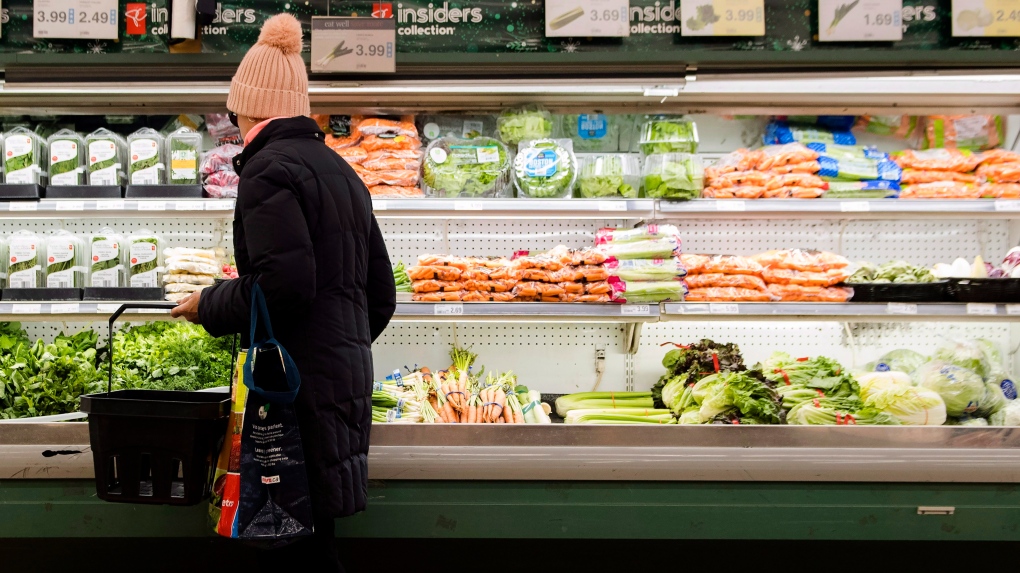
    Canadians can expect to pay more for food in 2022.

    That’s according to the Food Prices Report for 2022, prepared by researchers with Dalhousie University, the University of Guelph, the University of Saskatchewan and the University of British Columbia.

    The report, released in early December, projects that overall, food prices in Canada will increase by five to seven per cent in 2022.

    Here’s a look at which items will cost more:

    • Bakery products are forecast to see price increases between five to seven per cent.
    • Dairy products are forecast to see a price increases between five to seven per cent.
    • Vegetable prices are forecast to increase between five to seven per cent.
    • Fruit prices are forecast to increase between three to five per cent.
    • Meat and seafood prices are forecast to increase by up to two per cent.

    It’ll also cost more to eat out, with the prices at restaurants expected to increase by six to eight per cent.

    Overall, the report suggests that a family of four will have an annual food expenditure of up to $14,767, marking an increase of up to $966 from 2021.

    Food prices will also vary across the country. The report suggests Alberta, British Columbia, Newfoundland and Labrador, Ontario and Saskatchewan are all expected to see above-average food price increases.

    Meanwhile, Manitoba, New Brunswick, Nova Scotia, Prince Edward Island and Quebec are all forecast to see below-average food price increases.

    The authors of the report say in 2022, food insecurity will “be a big issue as Canadians grapple with rising prices.”

    “Food programs may face increased demand along with higher costs for food, and food retailers may see increase rates of theft,” the report reads. “We will continue to feel the growing impact of climate change and the continued effect of both transportation and labour market challenges.”

    VEHICLES

    Canadians can also expect the price for vehicles will be higher, at least into the first half of 2022.

    In a telephone interview from Michigan with CTVNews.ca, Kevin Roberts director of industry insights and analytics at CarGurus said, while Canadians can expect to see the price will increase for both new and used vehicles, the rate will “slow down” sometime soon.

    Roberts said while it’s “tough to know right now” how much prices will increase, he pointed to data from November.

    “New prices were up 6.4 per cent, and are up 25.5 per cent year-over-year,” he said. “So those are some pretty significant month-on-month gains that we’ve seen over the last couple months.”

    Roberts said, though that vehicle production, which has been constrained by supply shortages, should start to “pick up” again in early December.

    “The hope is that as we get to the middle part of 2022, that'll start to catch up with what demand looks like,” he said. “And when that happens, we start to see inventory levels improved, which should hopefully reduce prices slightly.”

    But, Roberts said because vehicle production forecasts change on a monthly basis, it’s too hard to pinpoint exactly when Canadians can expect to see prices drop.

    RETAIL

    Retail items such as clothes, toys and electronics will also cost more this year.

    Farla Efros, president, HRC retail advisory, a part of Accenture, said if you go to retail or grocery stores, you will notice a number of empty shelves.

    Efros said this is due to a “lot of pent-up demand.”

    “And you’re going to see this carry over towards the end of 2022,” she told CTVNews.ca in a telephone interview from Toronto. “Which is going to obviously be a struggle for a lot of folks especially the ones that are no longer going to be receiving their CERB cheques.”

    Asked if there will be specific items in the retail sector that Canadians can expect will cost more in 2022, Efros said a lot of prices are going to increase “across the board.”

    “It really depends on where you’re sourcing your goods from, so that’s going to be a big impact,” she explained.

    Efros said while supply chain issues continue, if manufacturers are relying on products made outside of Canada, it may become “harder and harder” for them to source the goods they need.

    “It’s going to continue to kind of put the pressure on,” she explained.

    She said there will likely be a price advantage for made-in-Canada products, meaning they may be more affordable for consumers.

    The price increase on retail goods will likely be felt all across Canada in 2022, Efros said.

    “I do think it’s going to be across Canada,” she said.” You’re seeing it now, I mean, if you go to the grocery store, it’s fairly obvious that some prices have gone up significantly.”

    Asked how long she expects this trend will continue, Efros said it is dependent on the supply chain, and availability of goods.

    HOME PRICES 

    House prices in Canada will also continue to rise in 2022.

    A report from the Canadian Real Estate Association published in June said the average home price in Canada is forecast to rise by 0.6 per cent in 2022.

    According to the CREA, the average home price will increase to $681,500 this year.

    The association said COVID-19 “supercharged trends that were already present” in Canada.

    “With even stronger first-time home buying activity teaming up with a surge in existing owners choosing to pull up stakes and move to find the right place to ride out the pandemic,” a news release reads. “This served to drive prices sharply higher while supply fell further to reach all-time lows.”

    However, the association said with vaccination now “well underway,” the “urgency with which so many sought out housing over the last year appears to be fading and the market is settling down, albeit from a very high starting point.”

    The association said while 2021 will “almost certainly” be a record year for home sales in Canada, 2022 is expected to see “significantly fewer MLS transactions.”

    “It is nonetheless still expected to mark the second-best year on record for Canadian home sales,” the release reads.

    According to CREA, national home sales are forecast to fall by 13 per cent, to around 594,000 units in 2022.

    GAS PRICES

    Gas prices will “absolutely, without a doubt” be higher in 2022, Roger McKnight, chief petroleum analyst with En-Pro International Inc., told CTVNews.ca.

    In a telephone interview from Toronto, McKnight said he suspects gas prices will be higher because “of the tax structure being introduced or promoted by the federal government.”

    McKnight pointed to the federal carbon tax that is set to come into effect in April of 2022.

    “And that’ll increase prices by three cents a litre,” he said.

    Further, McKnight said if the federal government greenlights the clean fuel standard, gas prices will jump “astronomically.”

    “I think from now to the end of the year, people are going to get very nervous about going out on the road because prices are going to increase rapidly,” he said. “This is because the recovery from the pandemic was much quicker economically than it was anticipated, so demand is far outstripping supply in so far as gasoline or diesel or crude is concerned.”

    He said unless we cut back on demand, prices likely won’t fall for “quite a while.”

    “And it’s going to be a very, very, rough time indeed,” he said. 

    Adblock test (Why?)


    Prices rising: What's going to cost more in 2022 - CTV News
    Read More

    Saturday, January 1, 2022

    COVID-19 outbreaks now reported at 7 federal prisons, more staff than inmates infected - Global News

    More federal prisons are reporting COVID-19 outbreaks, with the surge in new infections affecting not only inmates but also a large number of correctional officers and staff.

    New outbreaks were reported Friday at four Correctional Service Canada facilities: the Atlantic Institution in New Brunswick; Drumheller in Alberta; Stony Mountain in Manitoba; and the Kent Institution in B.C. Those follow outbreaks earlier this week at three other federal institutions.

    While the new outbreaks have led to dozens of inmates having become infected with COVID-19, the number of cases among prison staff has been much higher.

    Read more: COVID-19: 15 corrections officers test positive at federal prison in Quebec

    Correctional Services spokeswoman Marie Pier Lecuyer said Friday a total of 248 staff have tested positive for the novel coronavirus, compared with 107 inmates. The previous day, the agency had reported infections in 160 staff members and 88 inmates.

    Drumheller alone accounted for 41 of the new staff infections reported Friday, along with 13 inmates.

    At the Kent Institution in Agassiz, B.C., 18 staff had tested positive for the virus.

    The latest outbreaks, which have also affected the Nova Scotia Institution for Women, the Warkworth Institution in Ontario, and La Mazaca Institution in Quebec, come as Canada faces a surge in new COVID-19 cases driven by the highly contagious Omicron variant.

    Click to play video: 'COVID-19 outbreak closes Brockville Jail' COVID-19 outbreak closes Brockville Jail
    COVID-19 outbreak closes Brockville Jail – Dec 15, 2021

    As the number of cases among inmates and staff continues to grow, Lecuyer said Correctional Services is reviewing staff levels at its institutions to make sure there are enough officers to continue operating in a safe manner.

    “In addition, we have contingency plans, which indicate additional measures that can be taken to address staffing levels issue, such as approving staff overtime and having managers replace correctional officers, as needed,” she said.

    Some provinces have made the difficult decision in recent days to keep essential workers such as police officers, paramedics and hospital workers on the job even after they have tested positive for COVID-19, amid a nationwide explosion in new cases.

    Lecuyer said while correctional officers are not returning to work until they are fully recovered, the agency does have a protocol in place allowing the return of asymptomatic staff who have completed “the majority” of their 10-day isolation period.

    Such staff members will be subject to ongoing rapid testing and other “work-isolation measures,” she added.

    Read more: Canada begins vaccinating inmates in federal prisons with no active coronavirus cases

    Jeff Wilkins, national president of the Union of Canadian Correctional Officers, said it is concerning that federal prison staff are having to deal with COVID-19.

    However, while the union has been pushing the federal government to instigate hazard pay for correctional officers, Wilkins said he was generally satisfied with the measures put in place to protect them.

    “Of course, nothing can be perfect, but I do believe that the things that we have put in place have managed to keep the numbers as low as they are,” he said.

    Wilkins added there is no “one-size-fits-all” solution to a staffing shortage, but one solution might be to bring in staff from another institution that is close by and not experiencing an outbreak.

    © 2021 The Canadian Press

    Adblock test (Why?)


    COVID-19 outbreaks now reported at 7 federal prisons, more staff than inmates infected - Global News
    Read More

    Lupus and other autoimmune diseases strike far more women than men. Now there's a clue why - CTV News

    WASHINGTON - Women are far more likely than men to get autoimmune diseases, when an out-of-whack immune system attacks their own bodies -...