Rechercher dans ce blog

Thursday, September 1, 2022

Newborns of women with disabilities more likely to experience health complications, study finds - University of Toronto

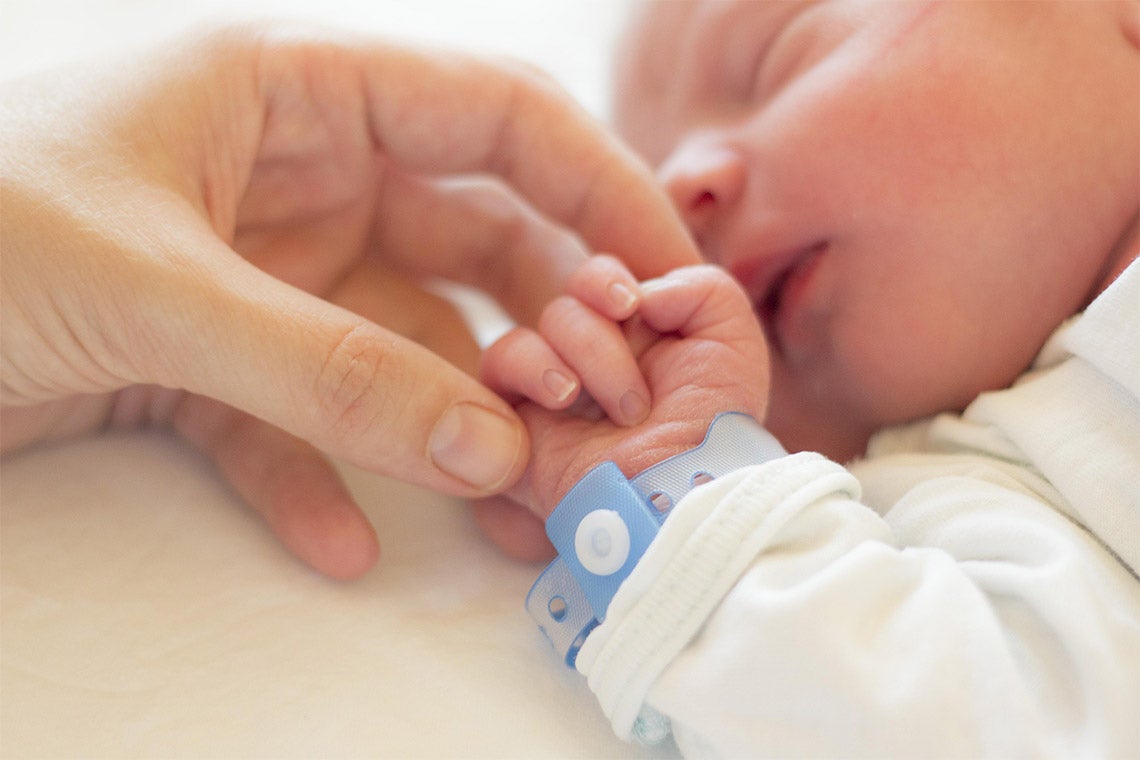
Babies of women with disabilities have a greater chance of experiencing rare health complications and requiring intensive care – though many of the health issues are preventable, according to a new study.

“There's good evidence that, especially for preterm birth and low-birth-weight babies, better access to prenatal care can make a big difference,” says Hilary Brown, co-author of the paper and assistant professor in the department of health and society at the University of Toronto Scarborough.

Hilary Brown is a Tier 2 Canada Research Chair in disability and reproductive health and an adjunct scientist at ICES (Photo by Ken Jones).

Published by the American Academy of Pediatrics, the study – one of the largest of its kind –found the greatest risks were in newborns of women with intellectual or developmental disabilities, and multiple disabilities. 

Researchers used data from the non-profit research institute ICES to look at all births in Ontario from 2003 to 2018. They compared the newborns of about 200,000 women diagnosed with a disability to the 1.5 million babies of women without disabilities. They also classified four types of disability in the mothers: physical; sensory; intellectual or developmental; and multiple disabilities. 

“Looking at different types of disabilities is important because when we think about making perinatal care more accessible, there's broad recommendations that can be made around physician training, but there's more specific recommendations we can make depending on the type of disability, such as making sure newborn intensive care units (NICUs) are physically accessible,” says Brown, who holds a cross appointment at the Dalla Lana School of Public Health and is an adjunct scientist at ICES and the Women’s College Research Institute at Women’s College Hospital.

Newborns of women with disabilities had higher rates of NICU admission, along with health complications and preterm birth. Except for those born to women with a physical disability, all were also more likely to be small for their gestational age.  

Aspects of mothers’ lives key to understanding impact of disability

There are several reasons why a baby may have health complications and many risk factors are more common in mothers with disabilities. The study found women with intellectual or developmental disabilities tended to live in the lowest income neighbourhoods; they and those with multiple disabilities also had higher rates of substance use. Women with disabilities were more likely to have unstable chronic health conditions and mental illness, and to smoke during pregnancy. 

“In addition to these medical factors, there are also important social or structural factors that may explain the risks we observed,” says Brown. “For example, we know that people with intellectual or developmental disabilities are particularly marginalized and experience big barriers in socioeconomic status and access to care.”

Researchers had to account for these risk factors and the odds that they were the cause of a newborn’s health condition. After factoring these into their analysis, there was still a moderately higher risk of health complications in newborns of mothers with disabilities. 

“There are other things, such as quality of care, that could explain the remaining risk,” Brown says. “This will be an important area for future research.” 

Pregnancy in women with disabilities and their newborns largely unexplored

Funded by the U.S. National Institutes of Health and the Canada Research Chairs Program, the study paints a limited picture since Ontario doesn’t collect patient data on race, ethnicity or individual income. Researchers also had little past work to draw on because the reasons why newborns of women with disabilities are more likely to have these health complications remain largely unexplored.

Brown says the lack of research is part of a problematic larger belief that pregnancy in those with disabilities is rare. By contrast, her 2020 study found one in eight pregnancies in Ontario were to a person with a disability.

That number is also rising. About 12 per cent of women of child-bearing age live with a disability, and fertility rates among the group are rising due to advancements in medicine and human rights. Brown notes that up until the 1970s, involuntary sterilization of people with disabilities was legal in Canada. While laws have reformed, these women still often face barriers to reproductive health care.

“We know that a lot of disparities in maternal and newborn outcomes really are driven by socioeconomic factors, and that speaks to the importance of all sorts of social programs.”

Accessible transportation, for example, can impact the ability to make it to prenatal care appointments. Physicians’ knowledge and attitudes can also significantly shape one’s experience in the health-care system.

“Physicians also need more resources and training on disability and pregnancy so they can provide high-quality care,” Brown says. “Structural changes need to happen across the system.”

Adblock test (Why?)


Newborns of women with disabilities more likely to experience health complications, study finds - University of Toronto
Read More

Haskayne student hopes to make business world more Indigenous-friendly - University of Calgary

Deciding what to apply for in post-secondary can be a nerve-racking decision for many students. Kiara Johnson, a soon-to-be-fourth-year student at the Haskayne School of Business, was no exception. 

Originally from the Samson Cree Nation in Maskwacis, Johnson grew up with a strong passion for sewing and designing, but taking the leap to leave for a university in a different province was a daunting thought. 

“I wasn’t ready to go off to fashion school in Vancouver or someplace right out of high school, because it felt too far,” says Johnson. “So, I thought, ‘What’s something I could do first that would ultimately help me on my journey to fashion?’ and I landed on business.” 

Today, Johnson is almost finished her Bachelor of Commerce degree at the University of Calgary, focusing on organizational behaviour in human resources and marketing, with an Indigenous studies minor. 

While still passionate about fashion and design, Johnson says she has found a new goal to work toward. 

“Within business, I’ve really had to find my way and find avenues to make it my own,” she says. “I found that, through my Indigenous studies option classes, I felt really connected to this idea of merging together Indigenous and business knowledge to create something that leads to a space of accessibility for all.” 

During her time at UCalgary, Johnson has participated in three major co-ops and internships that have helped her toward meeting that goal. 

She has participated in the Canadian Centre of Advanced Leadership in Business (CCAL) at the Haskayne School of Business. The premier Canadian leadership-development centre, it helps students meet today’s complex business environment and the challenges of our future. 

“CCAL and its initiatives are amazing,” says Johnson. “I had the honour of working for them for four months and really felt that the opportunity to hone in on leadership development was extremely valuable. (It) helped me to overcome some of the anxiety I felt when speaking to people in higher positions.”

Kiara Johnson

Kiara Johnson is about to go into her last year at the Haskayne School of Business.

Kiara Johnson

Johnson also completed the Ch’nook Scholars Program. Run out of the University of British Columbia, Ch’nook Scholars focuses on developing business skills for success and economic independence for Indigenous leaders, learners and entrepreneurs. 

“In my first year, (Haskayne instructor) Dr. David Lertzman picked myself and two other business students and recommended that we should apply for the Ch’nook program,” says Johnson. “I didn’t end up getting into the program then, which was probably for the best. Unfortunately, Dr. Lertzman passed away last year, and I felt that, in some ways, my finally applying for the first time since my first year was my way of honouring him and his legacy.” 

Through the Ch’nook mentorship program, Indigenous students can learn ways to combine Indigenous identities, culture, language, values and knowledge systems that should be respected. Johnson says she would highly recommend it to other students. 

This summer, Johnson participated in ATB 101, a work-experience program through ATB Financial, working within the realm of Indigenous financial services. This was the first time she was able to work in person with other students since the COVID-19 pandemic began, and the program saw her working on a project to revamp the current Indigenous knowledge pathway for learning within ATB. 

“This is the closest I’ve been throughout my co-op to the type of job I’d like to do after graduation,” says Johnson. “I think that one of biggest parts of creating a diverse and inclusive work environment is to educate on important topics that bring to light important issues and work to create a better space.” 

Johnson has no doubt her internship with ATB will have a major impact for the Indigenous community. 

“I think a big part of what we’re missing within business is that connection to Indigenous knowledge and an understanding of what has and continues to happen to Indigenous peoples,” says Johnson. “I see the work I’m doing as a stepping-stone to more accepting spaces that look deeper than stereotypes but look to advocate for the well-being of Indigenous peoples. 

“My goal is to help make the business world more welcoming for other Indigenous peoples like me who haven’t always felt like I belonged here.”

Adblock test (Why?)


Haskayne student hopes to make business world more Indigenous-friendly - University of Calgary
Read More

Atlantic premiers call for more time before submitting carbon pricing plans to Ottawa - CBC.ca

A day before the deadline for provinces to submit their plans to the federal government for how they will price carbon until 2030, Atlantic premiers are asking for more time.

Nova Scotia Premier Tim Houston, writing on behalf of the four Atlantic premiers, sent a letter to federal Environment Minister Steven Guilbeault on Thursday requesting the extension.

He said he and his counterparts are concerned the increased cost of energy through a carbon tax "will amplify the inflationary pressures currently being felt in Atlantic Canada and we believe that any discussion on carbon pricing should prioritize mitigating these impacts."

The Nova Scotia government says the federal carbon tax would add 14 cents to the price of a litre of gas in this province beginning next year.

Unlike most provinces, Nova Scotia has so far been shielded from shock at the pumps related to pricing carbon because of its use of a provincially designed cap-and-trade program. That program is set to expire this year.

"We are deeply concerned about the affordability impacts of carbon pricing on households in our region, especially as almost 40 per cent of Atlantic Canadians experience energy poverty — by far the highest rate in the country," writes Houston.

Houston and Nova Scotia Environment Minister Tim Halman were not available for comment on Thursday.

Looking for 'practical solutions'

The Atlantic premiers are requesting "a short-term extension for the provincial carbon pricing plan submissions," Houston writes.

That is so that premiers can meet with Guilbeault and his department officials to find "practical solutions to this issue, especially as they relate to home heating fuels" and discuss "options for the federal government to support energy affordability in the region" before the provinces formally submit their plans.

Nova Scotia's plan, submitted in late August, was rejected by Guilbeault earlier this week because it did not include a pricing mechanism for pollution.

With the province's cap-and-trade system set to expire and internal documents showing it's unlikely to be sustainable into the future, Nova Scotia instead submitted a proposal based on legislation passed last year.

The proposal calls for the closing of coal-fired power plants to generate electricity by 2030, an increase in the use of electric vehicles as well as other measures to reduce greenhouse gas emissions by 2030.

Guilbeault told the province that Ottawa is requiring all provinces to have some plan to price pollution. Beginning in 2023, the price on carbon will increase each year by $15 per tonne until it hits $170 per tonne in 2030.

In the absence of a cap-and-trade program, Nova Scotia was left with the option of accepting the federal carbon tax or coming up with a tax of its own design. The latter option would mean the province would have control over all the revenue generated by the tax. Ultimately, the province opted for none of those options in its proposal.

Federal tax includes rebate cheques

Guilbeault has acknowledged the affordability concerns Houston and his government have been raising since July, but he's also pointed out that quarterly rebate cheques paid out by the feds mean many people receive more money back than they pay out related to the federal tax.

Should a province get approval for its own tax design, it would get to determine how those revenues would be used. Internal documents obtained by CBC earlier this year show officials with Nova Scotia's Environment Department favoured using a carbon tax, which could generate $1 billion in revenue for the province, money that could be used to offset the impacts of the tax.

New Brunswick approach

New Brunswick adopted a consumer carbon tax in 2020 but reduced its provincial gas tax by four cents to offset the impact of the initial charge of 6.6 cents per litre.

Ottawa has warned other provinces that  — under the new, more stringent pricing standards starting in 2023 — they won't be allowed to imitate New Brunswick's offsetting gas tax cut.

But it hasn't forced New Brunswick to eliminate the four-cent offset, either.

As the carbon tax increased last year and this year, New Brunswick Premier Blaine Higgs's government didn't cut gas taxes further.

Instead, the government reduced income taxes to blunt the higher cost at the pump — something the federal plan allows. This year, the income tax cut was worth $40 million, equivalent to the new revenue from the carbon tax's jump from 8.8 to 11 cents this year.

The other question mark for New Brunswick is its rebate offsetting the carbon tax on natural gas for home heating.

The federal rules require that the tax apply to gas sales, but the province is using that revenue to pay gas distributor Liberty Gas to provide customers a rebate directly on their bills, eliminating the additional cost.

Ottawa allowed that when it approved the initial Higgs carbon tax model in 2020, but says the new more stringent standard won't allow any rebates that interfere with the "price signal" the carbon tax is supposed to send to consumers.

It remains to be seen whether New Brunswick will be forced to eliminate the rebate.

Meanwhile, in Newfoundland and Labrador

In Newfoundland and Labrador, the federal government accepted the province's carbon pricing plan in October 2018. Price changes began Jan. 1, 2019.

The province dropped its tax on gasoline and diesel, replacing it with a 4.42 cent and 5.37 cent carbon tax respectively, equating to $20 per tonne and rising by $10 per year, up to $50 this year. 

The plan also included exemptions for home heating fuel, which is not subject to a carbon tax. 

Certain industries were also exempt from the tax — aquaculture, agriculture, the fishery and offshore oil exploration among them. Instead, the government brought in a performance-based system for both offshore and onshore industries, to establish targets for greenhouse gas reductions.

N.S. government takes to the airwaves

Meanwhile, even before Nova Scotia's proposal to Ottawa was turned down, Houston's government recorded a radio ad touting its proposal and opposing a federal carbon tax.

The ads, which cost $13,300, started running on commercial radio stations on Monday, the day Ottawa turned down the province's proposal.

Nova Scotia NDP Leader Claudia Chender called the ads by Houston's government "a lot of smoke and mirrors to try to avoid our commitments as this deadline looms."

"They not only are fighting against this carbon tax, but they're refusing to come up with a substantive alternative," she said.

"We know, and the minister knows and the premier knows that what is required by the federal system is a price on carbon. Nothing in anything that has been submitted by our Houston government here prices carbon. So they're not doing their homework."

Nova Scotia Liberal environment critic Iain Rankin said the last-minute efforts by Houston's government have an air of desperation.

"It's been a year and they're desperate now to show that they want to have this battle with the federal government's policy that has been in place for over five years now," he said.

"It's not new news that carbon pricing is the law of the land in Canada, and to ask for more time when they are just kind of throwing up a Hail Mary, I think is disingenuous, to say the least."

MORE TOP STORIES 

Adblock test (Why?)


Atlantic premiers call for more time before submitting carbon pricing plans to Ottawa - CBC.ca
Read More

IENs want more exam prep time - CNO

On This Page

Toronto, ONT. Sept. 1, 2022 – The College of Nurses of Ontario (CNO) protects the public by promoting safe nursing practice. This includes registering nurses who have the knowledge, skill and judgment to practice safely in Ontario, whether educated in Canada or internationally. One requirement of registration is successfully completing a nursing regulatory exam.

CNO is exploring the barriers applicants may encounter in their journey to registration. As part of this, we recently surveyed 3,343 internationally educated nurse (IEN) applicants who are currently eligible to write the registration exam, but who have not attempted to, or who attempted to write the exam but failed. Of those surveyed, 1,282 applicants responded.

“We want to understand why these applicants are not taking the opportunity to challenge the registration exam, and what factors may influence their decision,” says Carol Timmings, acting Executive Director and CEO, and Chief Quality Officer of CNO.

Survey findings

Survey results show that the leading reason for IENs not writing the exam is lack of time to prepare. Sixty per cent of survey respondents said this is the top reason.

Nearly 26% indicate that family and personal reasons are a contributing factor, and another 22% cite finances as the primary reason.

Ten per cent of Registered Practical Nurse (RPN) applicants are nervous about writing the registration exam called REx-PN, while another 10% do not feel prepared to write the exam.

Of the 1,282 respondents, 92% plan to write the registration exam within the year. Less than 2% have not written the exam because they plan to close their application or they are uncertain about entering the work force because of the pandemic.

“The outcomes of this survey give us important information directly from applicants about why they’re choosing not to write the final registration exam,” says Timmings. “It’s important for us to identify barriers so we can work with government and system partners to find ways to remove barriers and support applicants to meet requirements fairly and equitably — while continuing to keep public safety as our most important priority.”

We will further analyze the results of the survey to better understand these barriers.

Increasing nurses in the system

The survey is part of CNO’s commitment to modernize our applicant assessment processes and is highlighted in CNO’s response to the directive from the Minister of Health, to support safe patient care.

Through our modernizing work, CNO has already broken records for registering IENs this year. Policy changes to the language proficiency requirement and collaborations like the Supervised Practice Experience Partnership have led to increased numbers of new nurses in the health care system. 

“We plan to continue this momentum as we collaborate with system partners and government to identify further system solutions to respond to the growing system demands,” Timmings adds.

Visit CNO’s Registration Totals at a Glance for detailed information on current registrations.

Page last reviewed September 01, 2022

Adblock test (Why?)


IENs want more exam prep time - CNO
Read More

Wednesday, August 31, 2022

Military probe of reported torture videos still silent after more than a year - CBC News

More than 14 months after launching an investigation, Canada's military police have yet to report on what — if anything — Canadian commanders did after being confronted by videos showing alleged atrocities involving Iraqi police being trained as part of a multinational program.

The slow pace of the investigation troubles the federal New Democrats — while a prominent human rights lawyer says the Department of National Defence (DND) has a history of downplaying or even ignoring acts of torture committed by allies.

In the spring of 2021, Postmedia reported that Canadian soldiers were shown videos of possible war crimes shot by their Iraqi students in 2018, soon after arriving at a U.S.-led training base near Mosul, the country's second-largest city. Mosul had been liberated recently from the grip of Islamic State extremists.

The videos allegedly showed Iraqi security forces raping a woman to death, along with multiple gruesome images of Islamic State prisoners being tortured and executed.

The trainers — alarmed at the prospect of training possible war criminals — informed the Canadian contingent commander. The commander told the instructors to not to look at any more such videos and promised to raise the matter with the chain of command.

It's not clear if the Canadians on the ground took up the issue with the U.S. commander of the base. It's not known outside of military circles how much military and civilian leaders in Ottawa knew about the matter.

In June of last year, sources with knowledge of the case told CBC News that some Canadian soldiers who had trained Iraqi police in the finer points of counter-terrorism had been interviewed by military police.

Gen. Wayne Eyre told CBC News over a year ago that he had ordered an investigation. (Lars Hagberg/The Canadian Press)

The country's top military commander, Gen. Wayne Eyre, told CBC News at the time that he had ordered an investigation to establish the facts.

Asked last week about the progress of the investigation, a DND spokesperson said the file is still open.

"The investigation into the matter is ongoing and no further detail can be provided at this time," head of DND media relations Dan Le Bouthillier said in an email.

Le Bouthillier added that troops of the 3rd Battalion Royal Canadian Regiment who were affected by what they reported witnessing were offered counselling — including something called "enhanced post-deployment screening," which takes place up to six months after deployment.

'Turning a blind eye'

The troops said they were shown the videos by their Iraqi students on Sept. 18, 2018. While they voiced their concerns immediately, the absence of any action by their commanders prompted more complaints after the trainers arrived home at Garrison Petawawa in Ontario.

On Oct. 20, 2020 — over two years after the deployment — the commander of the battalion and the regimental sergeant-major convened a town hall to brief troops on how their reports about the videos were handled and give them a forum to express their concerns.

Human rights lawyer Paul Champ — who headed the legal challenge over torture allegations involving Canada's transfer of suspected Taliban fighters during the Afghan war — said the current Iraqi investigation clearly is not a DND priority, is likely incomplete and is probably going nowhere.

"The Canadian military has a very troubling history of turning a blind eye to torture," Champ told CBC News.

"There's all kinds of examples where Canada just perversely turns a blind eye rather than taking, you know, the proper steps under international law."

He said Canada has an obligation to ensure that "torture committed by anyone is is properly investigated."

An Afghan suspect is interrogated during a joint Canadian-Afghan army patrol in the Panjwaii District of Kandahar province in 2009. (Colin Perkel/Canadian Press)

During the Canadian combat deployment in Kandahar, Ottawa initially agreed to hand over captured Taliban suspects to Afghan authorities — and did not retain the right to check on their welfare afterwards to ensure they were not being tortured in the course of interrogation.

It was only after reports of abuse surfaced in the media that the Conservative government of the day implemented a monitoring regime.

Under international law, Canada has a responsibility to ensure the people it hands over to other nations do not face the threat of torture.

Similarly, once the torture videos viewed by Canadian trainers in Iraq were reported up the Canadian chain of command, those commanders had a duty to report any such evidence of torture to the Office of the High Commissioner for Human Rights at the United Nations. It would be up to that agency to determine whether a war crime had been committed.

Lawyer Paul Champ: 'It wouldn't surprise me if this matter isn't being taken seriously.' (Sean Kilpatrick/Canadian Press)

"It wouldn't surprise me if this matter isn't being taken seriously," said Champ. "The big question is how high [up the chain] it went.

"You would like to think that whoever learned about those videos reported them up the chain. Back in Ottawa, you know, what level of general did this stop at? And what did that person do or not do?"

Federal New Democrats say the allegations by Canadian soldiers are deeply troubling and the Liberal government is failing to protect the troops.

"Our soldiers should never be put in the position of working with war criminals and any such concerns they raise must immediately be treated seriously when they come up," said Lindsay Mathyssen, the NDP critic for national defence.

"New Democrats support a full investigation to determine what exactly happened and call on the government to set up adequate whistleblowing mechanisms to ensure this never happens again."

Adblock test (Why?)


Military probe of reported torture videos still silent after more than a year - CBC News
Read More

Tuesday, August 30, 2022

Alcohol: More than 2 drinks per week heightens health risks - CTV News

Newly proposed guidelines for alcohol for alcohol consumption say Canadians should stick to a maximum of two drinks per week in order to reduce their risk of negative health consequences.

A report published by the Canadian Centre on Substance Use and Addition (CCSA) Monday follows two years of research and a review of more than 5,000 peer-reviewed studies, and says alcohol in even small quantities can be harmful.

The current Health Canada guidelines, which were also created by the CCSA and last updated in 2011, say men should limit their alcohol consumption to no more than three drinks per day and 15 drinks per week, while women should stick with a maximum of two drinks per day and 10 drinks per week.

Under these guidelines, "one drink" is defined as 12 oz. of beer with 5 per cent alcohol, 5 oz. of wine with 12 per cent alcohol, or 1.5 oz. of hard liquor with 40 per cent alcohol.

But now, the CCSA says even three to six drinks a week can increase the risk of developing certain cancers, such as breast cancer or colon cancer, while more than seven drinks per week can increase the risk of developing heart disease and stroke.

"The risk of negative outcomes begins to increase with any consumption, and with more than two standard drinks, most individuals will have an increased risk of injuries or other problems," the authors write in the report.

Cancer, the CCSA notes, is the leading cause of death in Canada and alcohol can cause at least seven different types of cancer. Heart disease is the second leading cause of death, and the CCSA says research over the last decade has shown that alcohol can cause problems for the heart.

"For many years, the commonly held belief that drinking in moderation offered protection against heart disease has been widely publicized. Research in the last decade is more nuanced with the most recent and highest quality systematic reviews showing that drinking a little alcohol neither decreases nor increases the risk of heart disease," the report states.

"At higher levels of use, alcohol is a risk factor for most types of cardiovascular disease, including coronary artery disease and heart attacks, heart failure, high blood pressure, atrial fibrillation and stroke," it continues.

These health risks remain the same regardless of what type of alcohol is being consumed or how much alcohol tolerance the individual has, the CCSA says.

The CCSA also warns that the lifetime health risks from consuming more than two alcoholic drinks per week "increases more steeply for women than for men." Because of differences in enzymes, genes, body weight, organ function and metabolism, the CCSA says alcohol has a greater impact on women and carries a higher risk of liver damage and diseases such as breast cancer.

On the other hand, men are more likely than women to drink in excess. As a result, men are also more likely to be involved in impaired driving collisions or become hospitalized for alcohol-related medical emergencies, the CCSA says.

"Overall, disproportionately more injuries, violence and deaths result from men’s drinking," the authors write.

The CCSA also notes that alcohol consumption, especially for men, has also been frequently associated with violent behaviour, including intimate partner or sexual violence.

"No exact dose-response relationship can be established but consuming alcohol increases the risk of perpetrating alcohol-related violence. Thus, it is reasonable to infer that individuals can reduce their risk of perpetrating aggressive or violent acts by limiting their alcohol use," the report states.

The CCSA has also begun a six-week online public consultation on the new drinking guidelines. Until Sept. 23, members of the public are invited to share their thoughts on in an online survey.

"We want people in Canada to have the latest evidence-based advice on alcohol to support them in making informed decisions about its use," CCSA CEO Alexander Caudarella said in a news release. "We’re excited to enter these final stages. The feedback we receive will help us ensure the clarity and validity of the final updated Low-Risk Alcohol Drinking Guidelines we’ll be releasing this fall."

Adblock test (Why?)


Alcohol: More than 2 drinks per week heightens health risks - CTV News
Read More

Sunday, August 28, 2022

Smoking weed is now more popular than smoking tobacco - CNN

(CNN)"It's the economy, stupid," Democratic operative James Carville once famously noted. Usually, that assertion holds when it comes to elections. But as we have seen from the changing political tides since Roe v. Wade was overturned, sometimes the economy takes a back seat to social issues.

Abortion, though, won't be the only major social issue on voters' minds this year. Marijuana legalization is on the ballot in a number of states, including Arkansas, Maryland and Missouri.
The chance for voters to decide whether weed should be legal comes at a time when newly released polling suggests cannabis is more popular than ever.
The high-water mark for marijuana, and the changing tides, is where we begin our weekly roundup of the political week that was.

Getting high reaches an all-time high

Every so often in polling, you get to witness a big changing-of-the-guard moment. That happened a few weeks ago, when Gallup released data on marijuana and tobacco usage in the United States. Two long-term trends finally collided.
For the first time in Gallup polling, more Americans (16%) said they smoke marijuana than had smoked a tobacco cigarette (11%) in the past week.
This probably doesn't come as a major shock to those who walk the streets in my New York City neighborhood. There are stores selling cannabis paraphernalia opening up left and right, and the streets smell like what I imagine scared parents believe a rock concert smells like.
At about the time humans first landed on the moon (1969), however, the idea that marijuana would one day be more popular than cigarettes was inconceivable. A Gallup poll from that year found that just 4% of Americans admitted they had even tried marijuana, let alone smoked it regularly. Today, 48% of Americans say they have at least tried it.
That same year (1969), 40% of Americans said they had smoked cigarettes in the same week. This was the lowest percentage recorded by Gallup between 1944 and 1972 of those who said they had smoked a cigarette in the past week.
Marjiuana and tobacco usage trends have been going in opposite directions for a few decades now. By 1985, nearly as many Americans said they had tried marijuana (33%) as had smoked a cigarette in the past week (35%).
Cigarette smoking has been declining ever since. By 2013, just 19% of Americans were smoking cigarettes at least once a week. Meanwhile, 38% of Americans told Gallup they had tried marijuana that year. This was the same year that 7% said they currently smoked marijuana.
The trend toward more marijuana smokers is, perhaps not surprisingly, driven by young people. The National Institutes of Health reported last week that more young adults used marijuana in 2021 than in any year prior.
Nearly a third (30%) of adult respondents under the age of 35 admitted to Gallup this year that they smoke marijuana. That's significantly higher than those aged 35-54 (16%) or 55+ (7%).
Smoking tobacco, on the other hand, isn't seen as cool. Just 8% of adults under 35 are smoking cigarettes at least once a week. Slightly more adults aged 35-54 (10%) or 55+ (14%) said they had.
The higher rates of marijuana smoking come with major political implications. As I have noted in the past, a record high percentage of Americans (over two-thirds, per Gallup) say they favor legalization of recreational marijuana. Ballot measures to legalize recreational marijuana have passed in blue states (e.g., New Jersey), purple states (e.g., Arizona) and red states (e.g., Montana) in recent years.
This year, we shouldn't be amazed if it passes in other blue states such as Maryland and even red states such as South Dakota. Again, this would be shocking if you had said so about 50 years ago. Only 12% were in favor marijuana legalization in 1969. As recently as a decade ago, the country was split down the middle on marijuana legalization in Gallup polling.
The times have certainly changed.

Americans stand with the FBI ... Republicans not so much ...

Speaking of things that might have been inconceivable in 1969, the FBI's search of a former President's residence continues to dominate the news. The man whose property was searched, Donald Trump, has tried to cry foul about the operation.
The American public, at least for now, isn't buying it; but Republicans seem to be sticking by their man.
A Reuters/Ipsos poll released after the search shows that most Americans think the FBI and the Justice Department are doing a good job. A plurality (46%) said that the FBI and the Justice Department had acted responsibly "following the FBI search warrant of Mar A Lago." Less than a third (29%) said they had acted irresponsibly.
This matches with other polling that found most Americans approved of the search.
Republicans, on the other hand, feel quite differently. A majority (54%) said the FBI and the DOJ had acted irresponsibly. Nearly the same percentage of Republicans (53%) said Trump had acted responsibly. Among all Americans, just 32% believed Trump has acted responsibly in the matter compared with 42% who said irresponsibly.
We see the same trend on the question of whether there should be more investigations. An NBC News poll released last week found that 57% of Americans want the investigations into Trump to continue. That dips to a mere 21% among Republicans.
Indeed, Republicans are, for now, sticking by Trump, no matter what is thrown his way. He retains about 50% of support in national polls of a hypothetical 2024 GOP presidential primary. This support has remained the same for a year and half, and it's a record for any nonincumbent Republican at this point in the run-up to a presidential primary.
Americans, as a whole, see things very differently. Trump's net favorability ratings (favorable minus unfavorable) has gotten worse over the past few months. He's gone from about a net favorability of -6 points in late March to closer to an average of -13 points in net favorability today.
With recent polling showing an incline in Biden's popularity, Trump is currently the most unpopular living person to ever be president.
Whether that ultimately keeps Republicans from nominating him in 2024 is one of the biggest questions in electoral politics. For now, many Republicans seem intent on nominating him in spite of the broader public's dislike of him.

For your brief encounters: College football is underway

On a totally different topic, college football season began Saturday. According to an Ipsos KnowledgePanel poll from 2021, 35% of Americans considered themselves fans of the sport. That's higher than every other sport tested, except for pro baseball (38%) or pro football (51%).
You may not realize the popularity of the game if you live in the Northeast, where a mere 25% are fans of the game. College football is much more popular in the Midwest (41%) and the South (40%).
The Southern powerhouse of Alabama is also the most searched-for team on Google in the last month. That said, who people search for is highly dependent on where they are in the country. The most searched-for team in the vast majority of states was a team other than Alabama.

Leftover data

Online grocery shopping is here to stay: A record-high 28% of Americans told Gallup in 2022 that they ordered groceries online for either pickup or delivery in the past month. That's up from 11% in 2019. Age plays a role here, as just 16% of those age 55 and older ordered groceries online.
A big racial divide on living with your parents: Thirty-six percent of adults say young adults living with their parents is a bad thing for society. According to the Pew Research Center, a plurality (47%) said it doesn't make a difference, while only 16% believed it is a good thing. There's a racial or ethnic divide, though. Many White adults (41%) said it is a bad thing, while fewer Asian American (23%), Black (26%) and Hispanic (28%) adults said the same.
Crypto pains: Pew found that a mere 16% of adults have been involved with cryptocurrency. Among that 16%, a plurality (46%) said their investments did worse than expected. Just 15% said they did better than expected.

Adblock test (Why?)


Smoking weed is now more popular than smoking tobacco - CNN
Read More

Lupus and other autoimmune diseases strike far more women than men. Now there's a clue why - CTV News

WASHINGTON - Women are far more likely than men to get autoimmune diseases, when an out-of-whack immune system attacks their own bodies -...