Rechercher dans ce blog

Thursday, November 3, 2022

New approach leads to more achievable and fiscally responsible capital budget for GNWT - Government of Northwest Territories

Members of the Legislative Assembly approved the $328 million Capital Estimates for the 2023-24 fiscal year. This includes money for critical infrastructure projects in communities across the Northwest Territories (NWT).

The 2023-2024 budget is significantly less than previous Capital Estimates. Over the past several years, capital budgets have been significantly higher than capital spending due to limitations in the capacity of the Government of the Northwest Territories (GNWT) and the territory to complete projects.  Under a new approach to capital budgeting, the GNWT has committed to ensuring that its budget will better reflect the expected capital spending.

Every year, the GNWT invests in infrastructure that helps us serve NWT residents, including public housing units, schools and health centres. The GNWT also invests in improvements and upgrades to transportation infrastructure like roads and airports that connect our people and communities.

The timing of approval of the 2023-2024 Capital Estimates provides a planning period for both departments and contractors. This planning period is intended to facilitate the procurement process and accommodate the relatively short summer construction period in the Northwest Territories.

Quote(s)

“The 2023-2024 Capital Estimates align realistic spending and achievable timelines and continue to advance mandate priorities agreed to by the 19th Legislative Assembly. The new approach that resulted in these proposed estimates will encourage comprehensive planning, support more realistic fiscal management and, importantly, focus attention and accountability where it should be—on the delivery of projects that are ready to be advanced.”

- Caroline Wawzonek, Minister of Finance

Quick facts

  • In total, the 2023-24 Capital Estimates presents a plan to spend $328 million on capital projects: A more realistic and achievable budget that reflects the current status of projects and the capacity of the GNWT and NWT construction industries.
  • The GNWT has taken a revised approach to the preparation of the 2023-24 Capital Estimates with the goal of developing a capital plan that better aligns the GNWT’s planned spending with actual project delivery.
  • Some previously announced projects have been moved from planned delivery in 2023-2024 onto a ‘priorities and planning’ list, including the Great Bear River Bridge currently proposed as part of the Mackenzie Valley Highway, the Colville Lake school, and a number of long-term care facilities.
  • This change does not mean that the GNWT is removing previously approved projects from our long-term planning.
  • The revised approach also did not affect annual capital funding pools, including small capital projects, capital asset retrofit and bio-mass funding, highway chipseal/bridge/culvert funding, information management and technology capital equipment or deferred maintenance.

Related links

For media requests, please contact:

Todd Sasaki

Manager, Public Affairs and Communications

Department of Finance

Government of the Northwest Territories

todd_sasaki@gov.nt.ca

Adblock test (Why?)


New approach leads to more achievable and fiscally responsible capital budget for GNWT - Government of Northwest Territories
Read More

Mobile Primary Healthcare Clinic to Visit More Communities - Government of Nova Scotia

More Nova Scotians will receive primary healthcare services as a new mobile clinic begins moving around the province.

The clinic, staffed by nurse practitioners and other primary care providers, is a temporary service that helps bridge the gap in primary care services. It was put together in September and located in Sydney to serve patients in that area in the aftermath of hurricane Fiona. More than 300 people visited the clinic, which offers a combination of in-person and virtual treatment for injuries and illnesses such as flu or cold symptoms, rashes, muscle pain and urinary tract infections. People can also get prescriptions refilled or renewed.

The clinic will be in Antigonish this weekend before moving to other areas of the province. Details about locations will be announced by Nova Scotia Health.

“The global shortage of healthcare professionals requires that we look at non-traditional approaches for delivering healthcare. And while we continue to work hard at recruiting and retaining more doctors, nurses and other vital healthcare workers, we must also look at new ways to meet the more immediate healthcare needs of Nova Scotians,” said Michelle Thompson, Minister of Health and Wellness. “The mobile clinic, along with VirtualCareNS, the introduction of urgent treatment centres, more community-based primary care clinics, and expanding the scope of primary care services offered by pharmacies will ensure thousands more Nova Scotians have access to care.”

The mobile clinic, a converted fifth wheel trailer, includes all the medical equipment needed to quickly set up a clinic anywhere in the province. It does not provide lab or diagnostic imaging services like blood tests, MRIs or X-rays, and cannot treat patients with urgent or life-threatening medical emergencies. Anyone experiencing a medical emergency should visit their local emergency department or call 911.

In Antigonish, the clinic’s healthcare team will focus on the needs of St. Francis Xavier students, many of whom are not permanent residents and who do not qualify for the Need a Family Practice Registry or VirtualCareNS. Appointments are required and must be booked by phone.

The mobile clinic was created through Nova Scotia Health’s Innovation Hub and is a partnership between Nova Scotia Health, Emergency Health Services, key community partners and Praxes medical group.

Action for Health, the government’s strategic plan to improve healthcare in Nova Scotia, encourages the health authorities (Nova Scotia Health and IWK Health) to develop innovative primary healthcare models to deliver care when, where and how it is needed. The mobile clinic will help provide the care Nova Scotians need and deserve, which is a key solution in the plan.

Quotes:

The Nova Scotia Health Innovation Hub, through working with partners, is using a test and try approach for innovative delivery of care in our province. These mobile primary healthcare clinics are an excellent example how we can help bridge the gap in access to care for Nova Scotians and give our healthcare professionals the opportunity to bring their expertise to different parts of the province. We are incredibly thankful to key partners and community leaders in our Eastern and Western zones, who are helping us to successfully scale this service. Gail Tomblin Murphy, Vice-President, Research, Innovation and Discovery and Chief Nurse Executive, Nova Scotia Health

Mobile primary care clinics are meant to bridge key gaps and needs within communities across the province. It is another form of access to primary care services by meeting the community where they are. We are using test and try approach by starting small and getting 60 per cent right and then we learn in real time. We already have great learnings from our implementation in Sydney during hurricane Fiona that has informed this broader implementation. Tara Sampalli, Senior Director, Implementation Science and Evaluation, and Global Health System Planning, Nova Scotia Health

We have a long history of partnering with Nova Scotia Health to provide many healthcare initiatives for St. FX students. These collaborations have led to improved continuity of care for students and have been invaluable in building relationships with our Nova Scotia Health colleagues. We’re excited to partner with them once again on this project, which will offer a much-needed boost to our limited capacity for providing primary health care to our students. Margaret McKinnon, Director of Health, Counselling and Accessible Learning, St. Francis Xavier University

-30-

Adblock test (Why?)


Mobile Primary Healthcare Clinic to Visit More Communities - Government of Nova Scotia
Read More

Business Leaders Need To Stand Up – Now More Than Ever - Forbes

Our country is in extremely choppy waters as we head into the mid-term elections next week, and CEOs have an understandable desire to avoid what might be considered “divisive” issues. A telling example for me – only eight out of the Fortune 500 companies committed to ending donations to politicians who opposed the certification of the valid results of the 2020 presidential election. Another is how Disney navigated their position regarding Gov. DeSantis’s Don’t Say Gay bill after hearing from their employees.

Today’s political and cultural landscape can be a challenging environment for business leaders to navigate. However, everyone has a part to play in solving these problems. Given their outsized power and influence, business leaders especially need to lead on values, plan for risks ahead, and bridge by example.

In the wake of the murder of George Floyd in 2020, leaders across the business spectrum snapped into action. It felt like we were on the cusp of transformational change.

Then the backlash arrived, as it always does when racial progress is made in this country.

Of course, we’re not the only generation to experience headwinds, but these threats to our economy, democracy, and civil society are real. They must be confronted if we continue to lead the world as a beacon of freedom and prosperity. We must also keep reckoning with the critical fact underlying many of the problems we face today: our social and economic systems continue to benefit white people more than just about every other non-white population in our country.

So where are we now? Among philanthropists, I have never seen more significant attention to issues of not just race but of equity more broadly. A broader swath of foundations and wealthy individual donors have begun to examine strategies and practices to support equity-focused work in the field. On the corporate side, many prominent business leaders are committed to doing better – not just in creating a more diverse workforce but in creating cultures of inclusion and in devoting resources to help build more opportunities in communities of color. Despite the highly orchestrated backlash we are currently experiencing, significant progress is happening.

After several tough pandemic years, employees are justifiably demanding more from their companies in terms of improved pay and benefits, access to crucial rights like reproductive health care, and living their espoused values with consistency.

Deciding whether and how to engage in a political or cultural fight often feels like a no-win situation for business leaders, particularly in a polarized and reactionary era like today. It’s impossible to draw lines that will please every constituency. But the reality is we can no longer wall off what’s happening outside our companies because our democracy is in a volatile place. No matter how “good” an employer is – how rich the benefits package, how inclusive the culture – if the broader society we operate in fails to provide the opportunity for a large majority of our people, that failure will land in the workplace, too. In short, the people whose rights are being challenged now are our customers, employees, neighbors, and family, and they need people with power to stand up for them. It may seem “bad for business” at first glance to get involved, but it will be much worse, in the long run, to stay silent.

Because the story we’ve been told – that we’re irrevocably polarized – is not valid.

Even if there may not be a perfect playbook in front of us, businesses can strive to repair past harms to which our organizations contributed. We can build teams that represent the full spectrum of our nation. We can create inclusive, equitable environments so people can show up as they are and feel a sense of belonging. We can be great corporate citizens in our communities. We can think holistically about the threats our democracy faces and what they mean for our work. And we can talk directly to each other, employees, and customers about the importance of our democratic values and join together to uphold them.

When so many Americans are divided, we need to serve as bridges – helping to build trust, communication, and a sense of shared community among people. Bridging does not mean trying to be bipartisan or above the fray – it means reminding our audiences in this troubled time that inclusion and equity are fundamental American values that enjoy the support of a large majority of our nation. By standing up for our shared values at this time, we can help break America out of this damaging period of our history and move us back toward success. I’m not suggesting it will be easy or that there won’t be short-term losses, but the stakes are far too high for any of us with societal influence to sit on the sidelines.

Leading with shared values is good for people. It is good for the economy. And we need to be willing to fight for them with all we’ve got.

Adblock test (Why?)


Business Leaders Need To Stand Up – Now More Than Ever - Forbes
Read More

Raptors follow up dominant win with even more impressive performance - Sportsnet.ca

{* #userInformationForm *} {* traditionalSignIn_emailAddress *}

Password

{* traditionalSignIn_signInButton *} {* traditionalSignIn_createButton *}
{* /userInformationForm *}

Adblock test (Why?)


Raptors follow up dominant win with even more impressive performance - Sportsnet.ca
Read More

Family of 4 must pay more than $1,000 per month for healthy food, study finds - CBC.ca

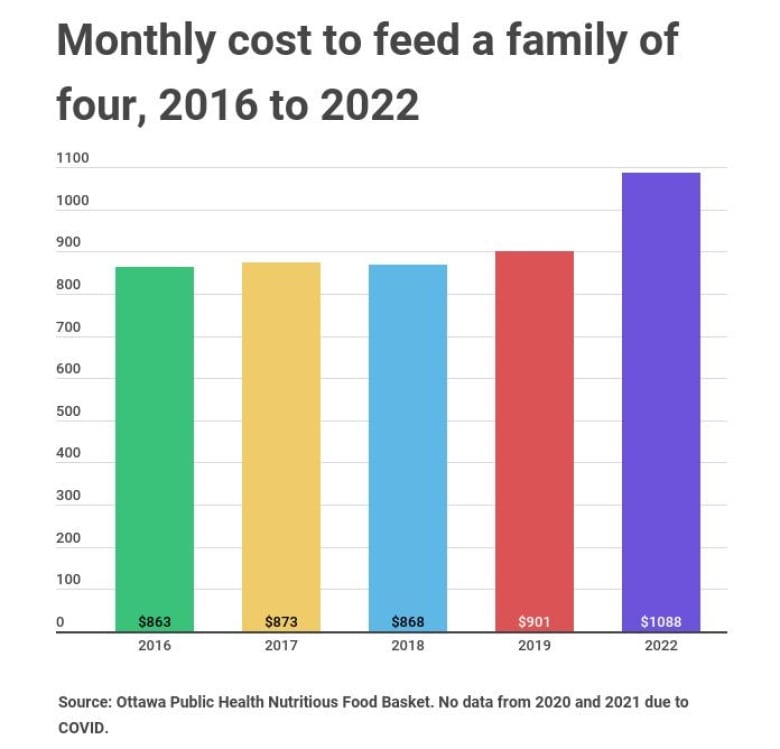
The cost of feeding a family in the capital rose more than 20 per cent during the pandemic, according to a new study by Ottawa Public Health.

It costs at least $1,088 per month to feed healthy meals to a family of four in the city, up from $901 in 2019, says Ottawa Public Health's 2022 Nutritious Food Basket survey.

For those living on Ontario Works financial assistance, or for single people living on the Ontario Disability Support Program income, paying for items like fruits and vegetables means going without or going into debt, the report found.

Researchers looked at 61 nutritious foods from various categories and tracked their prices at 14 stores in Ottawa — 12 in urban areas and two in rural parts of the city — between May 17 and June 6, 2022.

Food was selected using the updated Canada Food Guide and covered four categories: vegetables and fruit, protein foods, whole grains, and fats and oils. The study did not include infant foods, processed foods or allergen-free foods.

This year's study is the first in two years. Ottawa Public Health suspended the survey in 2020 and 2021 due to the pandemic.

"The results of the survey consistently show that individuals and families living on fixed or low incomes do not have enough funds remaining at the end of the month to afford their bills while also putting healthy food on the table," the 2022 study found.

"Families often choose between paying for fixed expenses (such as rent and utilities), other necessities (such as clothing, child care, medication, transportation, and dental care) and buying groceries."

About one in seven households in Ottawa can't afford healthy food, according to the report. Those households often face related challenges, like poor mental health, chronic health conditions and higher rates of infection, bad dental health and injury, the study said.

Public health officials made a number of recommendations to make food more affordable. The agency is calling for more social assistance benefits, jobs that pay a living wage, a basic income, affordable housing, public child care, as well as reduced income tax for low-income families. Public health officials also recommend free tax filing support in the city.

Adblock test (Why?)


Family of 4 must pay more than $1,000 per month for healthy food, study finds - CBC.ca
Read More

Wednesday, November 2, 2022

Student loans: More flexibility in repayment assistance plans - CTV News

The Canadian government on Tuesday announced enhancements to the Canada Student Financial Assistance Program’s repayment assistance plan, bringing more flexibility for student and apprentice loan borrowers.

As of Nov. 1, the zero-payment income threshold has increased by $15,000 to $40,000, up from $25,000, for single-person households. That means repayment will not be required until borrowers are earning at least $40,000 per year. The threshold will increase based on the size of the household.

Additionally, the cap on monthly affordable payments also decreased from 20 per cent to 10 per cent of a borrower’s household income, a move the government says is designed to ensure that no borrower has to pay more than they can reasonably afford.

“Starting today, more graduates can focus on building their careers instead of worrying about student loans. This is so important. A strong, skilled workforce depends on affordable, accessible education, and this change will ensure more Canadians have more flexibility when paying for school” Carla Qualtrough, Minister of Employment, Workforce Development and Disability Inclusion, said in a news release.

During the last federal election, the Liberal Party promised to increase the income threshold to $50,000 for single Canadians. Tuesday’s announcement falls short of that promise, but still represents a significant change for students.

Approximately, 180,000 students each year will benefit from these changes, according to the employment ministry.

In addition, the new zero-payment income threshold will be indexed to inflation annually.

“Raising the income threshold for the repayment assistance plan and indexing it to inflation annually will provide relief for many borrowers struggling with the impacts of inflation. The announced program changes will increase its usage and accessibility for borrowers in need,” Mackenzy Metcalfe, Executive Director of the Canadian Alliance of Student Associations, said in the news release.

The same enhancements are being made by the governments of Manitoba, Newfoundland and Labrador, Saskatchewan, New Brunswick and Nova Scotia to their repayment assistance plans. Quebec, the Northwest Territories and Nunavut do not take part in the Canada Student Financial Assistance Program, and receive alternative payments from the federal government to administer their own student loan measures.


Adblock test (Why?)


Student loans: More flexibility in repayment assistance plans - CTV News
Read More

Tuesday, November 1, 2022

Hundreds more families in B.C. benefit from $10-a-day child care | BC Gov News - BC Gov News

Burnaby:

Raj Chouhan, MLA for Burnaby-Edmonds –

“Burnaby is a diverse community and each family has unique needs. By investing in child care, we’re ensuring that families will be supported no matter what comes their way.”

Anne Kang, MLA for Burnaby-Deer Lake –

“I’m pleased with the work our government is doing to put people first. Under the previous government, child care went underfunded with families having to choose between quality care and making ends meet. Prioritizing families and investments will make a real difference in their lives.”

Janet Routledge, MLA for Burnaby North –

“As communities across the province continue to grow, we are continuing our record child care investments. Burnaby is a welcoming place for families, and our government is committed to supporting them so that they can thrive.”

Rachel Day, executive director, SFU Child Care Society –

“We are very encouraged to receive the funding from the $10 a Day ChildCareBC program for our families at SFU Childcare Society. With 323 spaces on our current site at the SFU Burnaby campus and 103 spaces opening in our new facility on Sapperton Avenue, Burnaby, on Nov. 1, this means over 250 families in our communities will benefit greatly from this child care fee reduction. SFU Childcare Society is committed to delivering the high-quality, dependable child care that all our families very much rely on. We are thankful that this funding will continue to support our important society values and that we can maintain our well-resourced and inclusive environment, not only for the children in our care, but for our very much valued educators and staff.”

Central Vancouver Island:

Doug Routley, MLA for Nanaimo-North Cowichan –

“Adding more affordable child care spaces and making sure they are accessible in our community will help families as they face a higher cost of living. I look forward to seeing the positive impact these new spaces have for children and families in Nanaimo and across B.C., and thank the child care providers who are our key partners in this work.”

Karen Love, executive director, BGC, Central Vancouver Island –

“Knowing that we can continue to offer the same high-quality and essential child care services to our parents for $10 a day means that it is now more affordable and accessible. This is vital to ensure we develop the adults of the future and work towards no more barriers.”

Parent of one child attending BGC Central Vancouver Island Ladysmith Child and Family Centre –

“We are newer parents and the $10-a-day day care is hugely helpful for increasing our family's financial security and for giving us some breathing room in an uncertain economy. The $10 a Day ChildcareBC plan is a wise and impactful investment in working families. We wish to express our sincere gratitude to all who worked to make it a reality.”

Coquitlam and Port Coquitlam:

Fin Donnelly, MLA for Coquitlam-Burke Mountain –

“I’m pleased our government is prioritizing families by creating new $10-a-day child care spaces in Coquitlam-Burke Mountain. Affordable child care is more important than ever with inflation making life more expensive for everyone.”

Mike Farnworth, MLA for Port Coquitlam –

“The cost of child care can be a barrier for parents who are pursuing education or career goals. By lowering child care fees, we’re saving parents hundreds of dollars each month and ensuring they can support their families.”

Danielle Fakim, director, Les P’tits Lutins –

“As a not-for-profit child care centre, our focus has always been to offer quality child care services to our francophone families at reasonable rates. When the opportunity arose to apply for the government implemented $10-a-day program, we knew that this would greatly support our existing families as well as the many others on our waiting list. We are pleased to have been accepted into the program and look forward to continuing to offer educational child care services to our growing francophone community at significantly reduced monthly fees. This is a great initiative for B.C. families.”

Marie-Chantale Bédard, parent of one child attending Les P’tits Lutins –

“Having access to this program will make a major impact for our family. It will allow us to adjust somewhat to the increasing cost of living in B.C., save additional funds for our child’s post-secondary education and, most importantly, spend more quality time as a family – which we all know has no price. We are beyond grateful for the $10-a-day program and look forward to the financial peace of mind this will bring our family and to all of our day care families.”

Kelowna:

Kirstie Blanleil, director of operations, BGC Okanagan –

“Quality child care is a necessity for families. Ten-dollar-a-day child care spaces will help ease financial burdens that families are experiencing.”

Parent of two children attending BGC Okanagan –

“Receiving the email with the news that our day care was selected for the $10-a-day initiative was like winning the lottery. We are two working parents who both work in the public sector and inflation has impacted us greatly. This relief allows us to breathe a little.”

Richmond:

Kelly Greene, MLA for Richmond-Steveston –

“For too long, families have had to make sacrifices in order to ensure their children have adequate care. By making child care more accessible and affordable, more parents will be able to pursue their education and their careers, knowing their child is thriving.”

Alana Robson, president, Little Wings board of directors –

“Little Wings Daycare is a small, non-profit centre, with a close-knit community and many dedicated parent volunteers. We are so very excited to be joining the $10-a-day child care program and continuing to provide quality care, now with better affordability for our families.”

Beth Williams, parent of two children attending Little Wings Daycare –

“Families need child care for a multitude of reasons – it’s good for children, parents and the economy. As a parent of two, both of whom have benefited from the high quality of care and enrichment at Little Wings, this kind of governmental investment in reducing barriers to access for families who need or choose child care is the right step to be taking. It’s an investment in our future and I am thrilled that this valuable industry and talented educators who enable it are being supported in this way. Our centre has been crucial in the health and happiness of my family and it’s exciting to move forward in making that even more accessible.”

Surrey:

Jinny Sims, MLA for Surrey-Panorama –

“Accessible child care is an essential resource for people in a growing city such as Surrey. The previous government treated child care as a luxury for far too long, and our government is supporting families by continuing to create new spaces in our communities.”

Nancy Garner, director, Young Climbers Childcare Centre –

“Young Climbers is excited to partner with the government to offer $10-a-day child care. By doing this, we want our families and community to know how much we value, love, support, encourage and care for them. The $10 a Day ChildcareBC program will have a positive financial impact, making affordable child care a reality. Families will pay no more than $200 a month, per child, for full-time enrolment regardless of the care type. This is great news!”

Mathew, parent of three children attending Young Climbers Childcare Centre –

“Young climbers Childcare Centre is where my three boys go for day care. We were the first family to hear this great news! This is a wonderful program and will allow our family to have the extra money to put away for rainy days and have more family fun together, as my wife and I were paying more in child care than some of my family members paid in mortgages.”

Vancouver and Vancouver Coastal Region:

Bowinn Ma, MLA for North Vancouver-Lonsdale –

“Child care can be one of the biggest bills a family faces each month. Affordable child care can change the lives of a family, and I’m thrilled to know that these new $10-a-day spaces will make a big difference for families on the North Shore.”

George Heyman, MLA for Vancouver-Fairview –

“We know people are struggling to make ends meet with the rising cost of living, and the cost of child care can place huge added pressure on families. The previous government chose to ignore the realities that working families face every day, but with our government’s universal child care plan we are making a meaningful difference for people in my community and across the province.”

West Vancouver Child Development Centre board of directors –

“The extension of the $10-a-day program to our centre is a life-changing difference for our families. It signals a commitment to maintaining healthy communities for working families and comes at a critical time when rising inflation and the high costs of living in the Lower Mainland is pushing many families out of the region, and/or out of the workforce. We know it will go a long way in improving the lives of our families and our community.”

Rebecca R., parent of one child attending West Vancouver Child Development Centre –

“My husband and I both work full time and have had one or both of our children in full-time day care for the past seven years. The announcement of the $10-a-day program coming to our day care will enable us to put savings towards our children’s future, where we might not otherwise have been able to do in this challenging economic environment.”

Williams Lake:

Linda Bond, administrator, Williams Lake and District Group Daycare –

“I’m absolutely thrilled to have our centre become a $10-a-day centre. I’ve been in child care for 35 years, since before $10-a-day was even an idea that at first seemed impossible, so to be in this situation now is quite surreal. It’s been so amazing letting our families know about being chosen for this program – they’ve almost universally gone from confusion, to disbelief, to relief and finally to excited planning! This will alleviate so much stress for many of our families and allow them to provide so many more opportunities for their children now, as well as in the future.”

Danelle Fuller, parent of two children attending Williams Lake and District Group Daycare –

“Ten-dollar-a-day child care is going to be life changing for our family and decrease our financial stress significantly. My husband has returned to college to further his education and the reduced child care cost will help alleviate the financial burden of being a single-income household while he completes his degree. We are also excited to be able to use some of the money we will save on child care costs to contribute to our children’s post-secondary education funds and extracurricular activities.”

Adblock test (Why?)


Hundreds more families in B.C. benefit from $10-a-day child care | BC Gov News - BC Gov News
Read More

Lupus and other autoimmune diseases strike far more women than men. Now there's a clue why - CTV News

WASHINGTON - Women are far more likely than men to get autoimmune diseases, when an out-of-whack immune system attacks their own bodies -...