Rechercher dans ce blog

Saturday, June 3, 2023

India train crash: More than 260 dead after Odisha accident - BBC

This video can not be played

To play this video you need to enable JavaScript in your browser.

At least 261 people have been killed and 1,000 are injured in a crash involving three trains in India's eastern Odisha state.

One passenger train derailed on to the adjacent track and was struck by an incoming train on Friday, also hitting a nearby stationary freight train.

A massive recovery operation is under way, after hundreds of emergency workers searched the wreckage.

The cause of India's worst train crash in over 20 years is not yet clear.

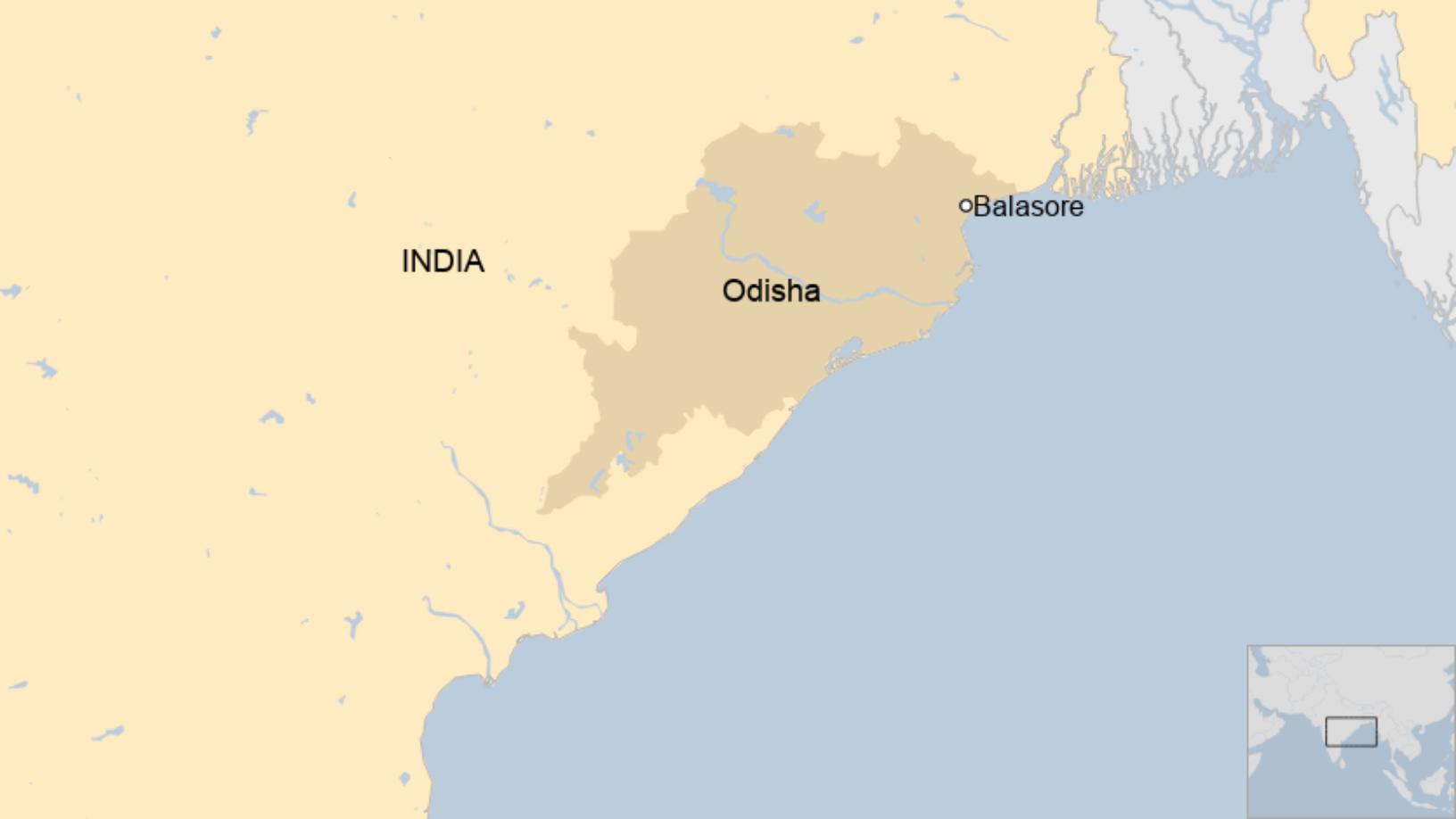
Officials say several carriages from the Coromandel Express, travelling between Kolkata (formerly Calcutta) and Chennai (formerly Madras), derailed at about 19:00 (13:30 GMT) in Balasore district after hitting a stationary goods train. Several of its coaches ended up on the opposite track.

Another train travelling in the opposite direction - the Howrah Superfast Express travelling from Yesvantpur to Howrah - then hit the overturned carriages.

"The force with which the trains collided has resulted in several coaches being crushed and mangled," Atul Karwal, chief of the National Disaster Response Force (NDRF) told ANI news agency.

More than 200 ambulances and hundreds of doctors, nurses and rescue personnel were sent to the scene, the state's chief secretary Pradeep Jena said.

Sudhanshu Sarangi, director general of Odisha Fire Services, had earlier said 288 had died.

All trapped and injured passengers have been rescued. It is not clear how serious the injuries of those taken to hospitals were.

Work to restore the site of the crash begun, India's South Eastern Railway company said on Saturday.

Rescuers searching the wreckage for survivors
EPA

Prime Minister Narendra Modi visited the site of the accident on Saturday afternoon, joining Railway Minister Ashwini Vaishnaw at the scene.

An investigation into the cause of the crash has been launched, although Education Minister Dharmendra Pradhan has blamed "technical reasons".

Survivors and eyewitnesses have described chaotic scenes and the heroic efforts of people from nearby villages to save trapped passengers.

Mukesh Pandit, who was trapped for half an hour before being rescued, told the BBC he heard a "thunderous sound" shortly before the carriage overturned.

"Four passengers who were travelling from my village have survived, but a lot of people are injured or still missing. A lot of people died in the coach I was travelling in," he added.

Site of the crash
Presentational grey line

India's deadly train crashes

  • June 1981: Nearly 800 people died when seven of the nine coaches of an overcrowded train fell into a river during a cyclone
  • August 1995: At least 350 people are killed when two trains collide 200km (125 miles) from Delhi
  • August 1999: Two trains collide near Kolkata killing at least 285 people
  • October 2005: 77 people are killed when a train derails in the southern state of Andhra Pradesh
  • November 2016: Nearly 150 people are killed and an equal number are injured when 14 carriages of the Indore-Patna Express train derail near the city of Kanpur
Presentational grey line

Residents of the neighbouring villages were among the first to reach the site of the accident and start the rescue operation.

India has one of the largest train networks in the world with millions of passengers using it daily, but a lot of the railway infrastructure needs improving.

Trains can get very packed at this time of year, with a growing number of people travelling during school holidays.

Both passenger trains involved in the crash were full and had many more people on the waiting list, according to passenger lists on the Indian rail ministry website reviewed by the BBC.

India's worst train disaster was in 1981, when an overcrowded passenger train was blown off the tracks and into a river during a cyclone in Bihar state, killing at least 800 people.

Banner saying 'Get in touch'

Are you in the area? Did you witness the incident? Email haveyoursay@bbc.co.uk.

Please include a contact number if you are willing to speak to a BBC journalist. You can also get in touch in the following ways:

If you are reading this page and can't see the form you will need to visit the mobile version of the BBC website to submit your question or comment or you can email us at HaveYourSay@bbc.co.uk. Please include your name, age and location with any submission.

Related Topics

Adblock test (Why?)


India train crash: More than 260 dead after Odisha accident - BBC
Read More

Friday, June 2, 2023

India train crash: More than 120 dead after Odisha incident - BBC

This video can not be played

To play this video you need to enable JavaScript in your browser.

More than 120 people are now known to have been killed and 850 injured in a multiple train collision in India's eastern Odisha state, officials say.

More than 200 ambulances were sent to the scene in Balasore district, says Odisha's chief secretary Pradeep Jena.

One passenger train is thought to have derailed before being struck by another on the adjacent track late on Friday.

Indian Railways said the two services involved were the Coromandel Express and the Howrah Superfast Express.

Speaking to reporters at the crash site, Odisha Fire Services official Sudhanshu Sarangi said: "We have now recovered more than 120 dead bodies."

He warned that the figures "might go up as we complete the process" of checking the overturned carriages.

Mr Jena earlier said that about 850 were injured, and more than 100 additional doctors have been mobilised. Rescue efforts were "in full swing", he added.

Indian Prime Minister Narendra Modi said he was distressed by the incident, and his thoughts were with the bereaved families.

"Rescue ops are underway at the site of the mishap and all possible assistance is being given to those affected," he tweeted.

Meanwhile, Home Minister Amit Shah labelled the incident "deeply agonising".

One male survivor said that "10 to 15 people fell on me when the accident happened and everything went haywire. I was at the bottom of the pile.

"I got hurt in my hand and also the back of my neck. When I came out of the train bogie, I saw someone had lost their hand, someone had lost their leg, while someone's face was distorted," the survivor told India's ANI news agency.

It is believed that several carriages from the Shalimar-Chennai Coromandel Express derailed at around 19:00 local time (13:30 GMT), with some of them ending up on the opposite track.

Another train - the Howrah Superfast Express travelling from Yesvantpur to Howrah - is then thought to have hit the overturned carriages.

Indian officials said that a goods train - which was stationary at the site - was also involved in the incident. They provided no further details.

Some surviving passengers were seen rushing in to help rescue those trapped in the wreckage.

Local bus companies were also helping to transport wounded passengers.

There are fears that the death toll will rise further.

India has one of the largest train networks in the world, and accidents are common despite successive governments investing hundreds of millions of dollars to improve the infrastructure, says the BBC's South Asia regional editor Anbarasan Ethirajan.

Map
Banner saying 'Get in touch'

Are you in the area? Did you witness the incident? Email haveyoursay@bbc.co.uk.

Please include a contact number if you are willing to speak to a BBC journalist. You can also get in touch in the following ways:

If you are reading this page and can't see the form you will need to visit the mobile version of the BBC website to submit your question or comment or you can email us at HaveYourSay@bbc.co.uk. Please include your name, age and location with any submission.

Related Topics

Adblock test (Why?)


India train crash: More than 120 dead after Odisha incident - BBC
Read More

Residents watch with dread as N.S.'s largest forest fire continues to rage in Shelburne County - CBC.ca

Residents of Shelburne County, N.S., continue to deal with growing forest fires in the southwestern region of the province that have displaced thousands of people.

The main fire near Barrington Lake — the largest in the province's recorded history — has grown to more than 20,000 hectares in size, while a smaller fire to the northeast near Lake Road is at about 120 hectares.

In a news update on Thursday, RCMP Cpl. Chris Marshall said so far, about 3,200 homes have been evacuated, displacing 6,700 people — about 50 per cent of Shelburne County's population.

Natasha Poirier and her mother, Jocelyne Poirier, live in Roseway, N.S., and have had to evacuate. The past few days have been "very emotional," Natasha Poirier said. 

"You get a very tiny sense of what refugees feel like," she added. "You're displaced."

Two women are seen. The one on the left is taller, wit curly brown hair, wearing sunglasses and a light blue button up shirt. The one on the right is shorter, with grey hair and a grey hoodie.
Natasha Poirier and her mother, Jocelyne Poirier, live in Roseway, N.S., and have had to leave their homes due to fires in southwestern Nova Scotia. (CBC)

While she and her family have been able to get assistance in finding lodging from the Red Cross, she's concerned about the size of the response to the fire in Shelburne County, compared to the blaze in the suburbs outside of Halifax.

"We're such a small community and everybody is going toward Halifax," Natasha Poirier said. "I understand it's a higher population, but this is a huge fire and it's not getting any better.

"We need more resources, we need more people," she continued. "It's like they forgot us down here."

'No hope of rebuilding a harvester,' says farmer

Peter Sutherland said he was just starting to see a profit from a 28-hectare blueberry farm he's spent the last 10 years working on when the fire destroyed some of his farming equipment, including a $200,000 harvester.

"It takes a long time to develop a wild blueberry farm," Sutherland said. "Hope I have a crop still, but I've got no hope of rebuilding a harvester this year. I'll have to try and rent one. I hope within the year, if I get enough insurance money, I can have it back again."

He first heard news of the fire on Sunday when it was focused near Barrington Lake. It was later on when he noticed fire closer to his blueberry farm when he decided to move some of his equipment, including an excavator and skidder, to gravel pits on his property.

While he was moving equipment to safer areas of the farm, he said he was approached by RCMP officers who told him a mandatory evacuation notice had been issued and he needed to leave, or he would be arrested.

"That was the last I've seen of my blueberry farm," he said. "I got reports that, yeah, a lot of my equipment had burned. And I said, 'yeah, probably the stuff that I didn't get to move.'"

A man is seen wearing transition lenses, a ball cap and a navy sleeveless shirt.
Peter Sutherland said he was just starting to see a profit from a 28-hectare blueberry farm he’s spent the last 10 years working on when the fire destroyed some of his farming equipment. (CBC)

Thankfully, he said, his home wasn't damaged by the fire, but he's still waiting on information about his farm, as well as the 16 beehives he has on his property.

Sutherland said, "I'd love to go back and use some of my equipment to help out and put out spot fires, so the fire trucks can water them down.

"I know it's going to take a long time to get to, but I can't get nowhere and it's frustrating."

Possible aid for farmers from federal government

On Wednesday, Premier Tim Houston told reporters that in a letter to Prime Minister Justin Trudeau, he made a list of requests for help with the fire and its aftermath, including financial aid for farmers.

Greg Morrow, provincial agriculture minister, said Thursday some of that aid would help cover costs to restart farms in evacuated areas, loss of income, relocation and loss of livestock, among other costs.

"These aren't necessarily large agricultural areas, but every farm in the province is important," Morrow told reporters. "They put food on our tables and contribute to the economy, so we want to make sure that we're there to help every farm."

There's no timeline on when a possible farm aid program will roll out, but Morrow said the province is looking to offer support to affected farmers "as soon as possible."

MORE TOP STORIES 

Adblock test (Why?)


Residents watch with dread as N.S.'s largest forest fire continues to rage in Shelburne County - CBC.ca
Read More

Should your community be forced to build more housing? - CBC.ca

It is a priority for CBC to create products that are accessible to all in Canada including people with visual, hearing, motor and cognitive challenges.

Closed Captioning and Described Video is available for many CBC shows offered on CBC Gem.

Adblock test (Why?)


Should your community be forced to build more housing? - CBC.ca
Read More

Inside a debt ceiling standoff ‘far more dangerous than people will recognize’ - CNN

CNN  — 

President Joe Biden ended the month of May the same way he began it: with a phone call to House Speaker Kevin McCarthy.

His first call invited McCarthy to the first in a series of meetings to negotiate an agreement on the debt ceiling and the budget. His latest came Wednesday night, after a bipartisan coalition in the House voted 314 to 117 to comfortably pass that agreement, moving the White House a critical step closer to dodging the kind of economic calamity that could derail two years of legislative progress – and a reelection campaign. The legislation passed the Senate late Thursday.

But in between those two phone calls was a process that people involved acknowledged was far from certain to create the outcome it did. The weeks were defined by days of negotiations, several breakdowns, one slow-moving bike ride and, in the end, an effort that found two sides that started largely unfamiliar with one another unwilling to accept failure – and the sweeping repercussions that would bring.

It was an effort one White House official candidly acknowledged “was far more dangerous than people will recognize given the outcome.”

For each side, the process involved painful tradeoffs that earned them barbs from the right and left: Questions about why the process didn’t begin sooner, why alternative methods for raising the debt ceiling weren’t explored more fully and why the debt ceiling exists in the first place have all been raised in the aftermath.

But for now, with disaster likely averted, each side describes a process that proved illuminating in an era of diminishingly few bipartisan achievements.

“You’ve got two Irish guys who don’t drink,” Rep. Patrick McHenry, one of the Republican negotiators who helped serve the deal, said of the relationship between Biden and McCarthy. “The bonding opportunities are not the same as for an Irish guy like me.”

Negotiations kicked into higher gear on May 16, after Biden appointed his counselor Steve Ricchetti and budget director Shalanda Young to lead negotiations alongside Legislative Affairs Director Louisa Terrell.

Young’s appointment, in particular, drew an immediate nod of approval from McCarthy, who pivoted from his seat in the Oval Office to look back at Young.

“She’s well respected by both sides,” McCarthy said of the former longtime House Appropriations Committee staffer, according to White House officials. “I think she’d be great.”

Office of Management and Budget Director Shalanda Young speaks during a daily news briefing at the James S. Brady Press Briefing Room of the White House on March 10, 2023 in Washington, DC.

It didn’t hurt matters that Young hailed from Louisiana, the same state as Rep. Garret Graves, one of the Republicans appointed by McCarthy to hammer out an agreement. During talks, the two joked about who made a better gumbo (“She conceded,” Graves joked) and that Young’s father and Graves work out at the same gym.

When Young arrived in the Capitol for one of the first meetings between White House staff and the speaker’s office, she was spotted by GOP Rep. Tom Cole of Oklahoma, a longtime appropriator.

He could barely contain his excitement – and relief.

“I feel so much better knowing you’re in the room,” Cole said, as he embraced Young in a big hug.

The newly appointed White House trio began meeting with McCarthy’s negotiating team that night and met in person nearly every day from that point on, at times shuttling between both ends of Pennsylvania Avenue two to three times a day.

They shared late nights and meals, including a delivery of Call Your Mother bagel sandwiches during an especially critical four-hour long meeting last Thursday, courtesy of White House chief of staff Jeff Zients. Young and McHenry, who both have young children, called each other each morning while dropping off their children at daycare, White House officials said.

‘We were cut out, and they have work to do’

Throughout the negotiations, the trio of White House officials worked to keep the president, Senate Majority Leader Chuck Schumer and House Minority Leader Hakeem Jeffries updated on a daily basis. Ricchetti, the senior-most member of the White House team, spoke regularly with McCarthy throughout the talks.

A veteran of three administrations who has been a constant presence by Biden’s side since his vice presidency, Ricchetti was also viewed as a critical conduit to and from Biden himself.

“It’s clear when he’s speaking, he’s speaking for the president,” a House Republican briefed regularly on the talks told CNN. “And when he’s listening, you know it’s going to get back to the president.”

Terrell was in constant contact with McCarthy’s chief of staff, Dan Meyer, a long-time Capitol Hill veteran who had already announced his intent to retire after the debt ceiling stalemate was resolved.

Rep. Garret Graves arrives at the office of Speaker of the House Rep. Kevin McCarthy at the U.S. Capitol on May 25 in Washington, DC.

It was a team with experience, deployed in a carefully calibrated – and intentionally mapped out – series of options, breakdowns in talks and eventual path forward that would secure the sign off from Biden and, perhaps more critically, their House Republican counterparts.

But it was also a team that intentionally – much to the frustration of Democrats on Capitol Hill – kept the details of their work close to the vest. As McCarthy and his negotiators spoke daily, and often much more, to reporters as they sought to press their priorities, Biden and his team remained silent.

“Asking me about the communication (with the White House) implies there was communication,” one House Democrat said. “We were cut out, and they have work to do.”

But White House officials, while keenly aware of the work needed after the agreement was reached to read in Democratic members on the other side of Pennsylvania Avenue, said the posture was intentional – and driven by Biden.

“Their view is that there’s no upside to broadcasting the play-by-play,” another House Democrat, echoing widespread frustration inside the caucus, told CNN. “I happen to disagree with that view, but also recognize that they reached an outcome.”

White House officials also insisted, in repeated and painfully awkward public appearances, that they hadn’t deviated from Biden’s monthslong position of not negotiating over the debt ceiling.

That was exactly what they were doing, in large part because House Republicans had passed their own legislation despite significant skepticism – inside the White House and even among GOP members – that would be possible.

GOP negotiators believed they had room to cut deals with the White House, and they credit the speaker with giving them “the space” to do it. McHenry and Graves kept McCarthy constantly apprised, decamping to his office around the clock, walking with him to get Chipotle or in Graves’ case meeting up for a bike ride on the National Mall to hash out the details of what was on the table.

‘We had probably three major blowups’

Shortly after talks started, White House officials offered a proposal they knew would be rejected: A series of tax increases on high earners and corporations included in Biden’s budgets and a feature in his stump speeches on the debt limit that would bolster his deficit reduction bona fides.

Republicans, as they had long made clear, rejected the provisions – and any tax increases – out of hand and made little secret of their frustration over the play.

Rep. Patrick McHenry speaks to reporters outside of the office for House Speaker Kevin McCarthy in the US Capitol Building on May 30, 2023 in Washington, DC.

The back and forth elicited sharp responses from Republicans, who viewed the tactics as political and ignorant to the urgency of an acutely high stakes moment.

Negotiations broke down. And then broke down again.

White House officials were also faced with the reality of the presidency – and a scheduled three-stop foreign trip that landed right in the middle of the negotiations.

Biden ultimately decided to cancel two stops on the trip. But he viewed his travel to the Group of Seven summit in Hiroshima, Japan, as too critical in the midst of a tenuous geopolitical moment to miss.

For the White House negotiators, that meant late nights and early mornings. During the particularly turbulent third weekend of May, following a sudden pause in negotiations that Friday, White House officials briefed Biden at 9:30 p.m. on Saturday, reconvened for a 10 p.m. meeting, only to wake up and brief the president again at 4:30 a.m. the next morning, White House officials said.

Republican negotiators described tedious, long meetings where most of the time they “inched forward.”

On Friday, May 19, talks “blew up,” Graves remembered. The White House negotiators left Capitol Hill abruptly and for hours, it was unclear when the conversations would resume.

In one particularly tense moment, as the White House staff were deriding the GOP tax cuts bill and citing what Republicans felt was a questionable CBO score, one McCarthy staffer yelled across the table: “Bullsh*t.”

The White House contends Republicans offered up a proposal that amounted to a list of Republican positions that were nonstarters for Biden.

After the meeting, the negotiators decided to put a “pause” on the talks, giving everyone a much-needed opportunity to cool down.

“We had probably three major blowups in this negotiation, one of which was that Friday,” McHenry said.

At the time, Graves said the spending side of the negotiations were at a logjam. He and McHenry – despite their wide latitude in the talks — had been given an explicit order by McCarthy. They were to spend less money in 2024 than in 2023 on domestic priorities.

“The White House position at time is that they were going to spend more money,” Graves remembered. “Those things directly contradict. On that Friday, the White House took about two steps backwards in negotiations.”

President Joe Biden speaks during a news conference in Hiroshima, Japan, Sunday, May 21, 2023, following the G7 Summit.

The negotiations up until that point had been closely held.

“Our intention was just to negotiate in the room, work things out,” McHenry said.

But he recalled that it was around this time “we said publicly our private frustrations.”

As negotiations appeared to offer little path forward, Biden made plans to call McCarthy aboard Air Force One on his way back to the US.

The most powerful Democrat and Republican in the country both recounted the conversation as cordial and businesslike. Biden made a point of briefing McCarthy on the summit itself.

But it also marked a critical turn for the talks themselves. Quietly, White House negotiators had never actually stopped talking to their Republican counterparts. Methodically, with engagement both teams repeatedly called fair and professional, the groundwork was laid for the multi-day sprint ahead.

Where rank-and-file Democrats insisted they were kept in the dark, Biden insisted on maintaining a clear and united front with Democratic leaders, officials said.

When the negotiators reconvened after Biden’s return, White House officials suggested a change in venue. The Republicans were invited to the Eisenhower Executive Office Building, where Young has her office.

Over the course of four hours – and the sandwiches sent from Zients – the negotiators moved through the key pillars of the deal. After the meeting ended, McHenry stayed on campus, walking across West Executive Avenue and into the West Wing to continue meeting with Ricchetti for another hour.

House Speaker Kevin McCarthy arrives to his office on Capitol Hill, Monday, May 29, 2023, in Washington.

Negotiators worked around the clock, but there were times when outside life events came calling. Graves had to attend a personal matter, forcing him to even miss a Monday night votes series. McHenry, who at times throughout the process had his small children in tow, attended his neighbor’s kid’s birthday party last weekend, which he jokingly described as a “two-year-old rager” when he returned back to the Capitol.

And during a critical moment in the negotiations, Graves and Young – both Louisianans – attended a White House event celebrating the LSU Tigers, the 2023 NCAA women’s basketball champs.

Graves confirmed that the two talked shop at the event, calling it “a very candid conversation about how we’re going to move forward, if we’re going to be able to come together and ultimately get a deal.”

The Saturday morning before the debt ceiling deal would come together, Graves met McCarthy on the National Mall for a bike ride to brief him on the emerging agreement.

“It was a meeting on wheels,” Graves said.

The ride was tedious, however, such that Graves, who shares his exercise data with members of his family, heard from his son, harassing him about “riding so slow.”

“He was hazing me about our speed,” Graves joked, pulling up data showing his 9.8 mile ride took him 45 minutes.

‘This was no easy task to get here’

As the negotiators worked through the final, and exceedingly thorny, issues outstanding, Biden started to turn his attention to calling key Democrats in search of votes and voices of public support. Over the weekend, he spoke with Rep. Jim Clyburn, the South Carolina Democrat and close ally who helped save Biden’s 2020 campaign. Clyburn soon hit the airwaves to talk up the deal.

After Rep. Annie Kuster, the chairwoman of the 99-member strong New Democrat Coalition, endorsed the bipartisan deal in a statement Monday, Biden called to thank her for support, talking up the benefits of the deal and the key Democratic priorities he was able to protect from Republican spending cuts.

“We talked about how we would work together to get the votes to get it passed,” Kuster told CNN. “We both agreed that this was not an ideal circumstance to be in, but once we went to work and really put our shoulder to the wheel that the outcome in terms of protecting the programs that are so important to our constituents was very positive.”

While Biden made some key calls, a dozen senior administration officials hit the phones, making more than 100 one-on-one calls to Democratic lawmakers ahead of the House vote.

A series of briefings were set up for congressional Democrats, many still seething about their contention they were boxed out of the talks.

The blowback from progressives wasn’t a surprise, officials made clear. They both expected and – even if they viewed the deal as a positive outcome – understood.

As Biden’s senior officials gathered behind closed doors in the Capitol to brief House Democrats, the lawmakers proceeded to give Young two standing ovations for her efforts.

As for Young, she made clear she was looking forward to spending time with her young daughter again and, after being spotted by reporters with a Nordstrom Rack bag in an emergency effort to address a lapsed dry-cleaning routine, perhaps do some laundry as well.

There was work to do with Democratic lawmakers and the Appropriations process and its deadline would be bearing down soon enough. For the moment, however, the exceedingly real risk of economic – and political – devastation posed by default had been taken off the table.

“I can assure you that this was no easy task to get here, but what was on the line for the American people was real,” Young said this week. “I know I breathed a little easier – I called my parents, told them to breathe a little easier – that a deal had been reached. And that’s what this was all about.”

This story has been updated to reflect the bill’s passage in the Senate.

Adblock test (Why?)


Inside a debt ceiling standoff ‘far more dangerous than people will recognize’ - CNN
Read More

Thursday, June 1, 2023

Canadian officials announce more than $18,000 fine for Nova Scotia burn ban violations as wildfires continue to rage in region - CNN

CNN  — 

Canadian officials announced a fine of more than $18,000 on Wednesday for anyone in Nova Scotia who violates a province-wide burn ban implemented this week as wildfires continue to rage in the region, which has prompted air quality alerts in the northeastern US.

The fires, which have spanned more than 42,000 acres as of Wednesday, destroyed buildings and produced huge plumes of smoke as Nova Scotia struggles with record-breaking heat. Officials on Monday announced the province-wide burn ban, expected to stay in place until June 25, due to the “seriousness of the current fires.”

“Yesterday I told you there were six burns overnight,” Nova Scotia Premier Tim Houston said during a news conference Wednesday. “Last night? At least eight. At least eight more reckless people chose to burn. I do not know what they are thinking.”

During the news conference, Houston said, “Anyone who burns in this province, anyone who disrespects the provincewide burn ban” can be subject to a fine of 25,000 Canadian dollars ($18,430).The fine was initially set at 237.50 Canadian dollars.

“The forests are simply too dry. The conditions are too volatile,” Houston said.

The province’s Department of Natural Resources and Renewables said Wednesday that 17 firefighters are traveling from New York and New Hampshire to help Nova Scotia fight the wildfires starting on Saturday, according to a news release.

“We’re taking every measure to prevent new fires from starting,” said Tory Rushton, the province’s minister of natural resources and renewables. “All Nova Scotians need to do their part – follow the burn ban, stay out of the woods and help keep your families and communities safe.”

There were at least 14 active wildfires burning throughout the province on Wednesday afternoon, with at least three that remain “out of control,” according to Scott Tingley, manager of forest protection for the provincial Department of Natural Resources and Renewables.

Province remains hot and windy amid wildfires

The National Weather Service issued a Code Orange air quality alert for New Jersey and southeastern Pennsylvania, including the Philadelphia region, which means air pollution concentrations in there may become unhealthy for sensitive groups, including the elderly and young children. Those groups should minimize time outdoors and avoid strenuous activity, the NWS added.

The smoke may be close enough to the ground that the affected area will see several hours with elevated concentrations of “fine particulate matter,” CNN reported. These microscopic particles have a diameter of less than 2.5 microns – significantly smaller than the average width of a human hair. Their tiny size allows them easier access deep into lungs, which can exacerbate the effects of respiratory diseases such as asthma.

From Wednesday through Thursday, the region continues to be warm and windy without any rain in the forecast, according to Environment and Climate Change Canada, the country’s federal environmental agency. Thursday will be the hottest day of the week and scattered showers will begin to move into the region on Friday with rain expected this weekend, which will bring cooler temperatures.

Smoke from the wildfires burning in Tantallon, part of the Halifax Regional Municipality, has reduced visibility and air quality in the area and strong winds have allowed smoke to spread to communities north and east of the municipality, according to CNN meteorologists.

CNN’s Taylor Ward and Derek Van Dam contributed to this report.

Adblock test (Why?)


Canadian officials announce more than $18,000 fine for Nova Scotia burn ban violations as wildfires continue to rage in region - CNN
Read More

Canadian officials announce more than $18,000 fine for Nova Scotia burn ban violations as wildfires continue to rage in region - CNN

CNN  — 

Canadian officials announced a fine of more than $18,000 on Wednesday for anyone in Nova Scotia who violates a province-wide burn ban implemented this week as wildfires continue to rage in the region, which has prompted air quality alerts in the northeastern US.

The fires, which have spanned more than 42,000 acres as of Wednesday, destroyed buildings and produced huge plumes of smoke as Nova Scotia struggles with record-breaking heat. Officials on Monday announced the province-wide burn ban, expected to stay in place until June 25, due to the “seriousness of the current fires.”

“Yesterday I told you there were six burns overnight,” Nova Scotia Premier Tim Houston said during a news conference Wednesday. “Last night? At least eight. At least eight more reckless people chose to burn. I do not know what they are thinking.”

During the news conference, Houston said, “Anyone who burns in this province, anyone who disrespects the provincewide burn ban” can be subject to a fine of 25,000 Canadian dollars ($18,430).The fine was initially set at 237.50 Canadian dollars.

“The forests are simply too dry. The conditions are too volatile,” Houston said.

The province’s Department of Natural Resources and Renewables said Wednesday that 17 firefighters are traveling from New York and New Hampshire to help Nova Scotia fight the wildfires starting on Saturday, according to a news release.

“We’re taking every measure to prevent new fires from starting,” said Tory Rushton, the province’s minister of natural resources and renewables. “All Nova Scotians need to do their part – follow the burn ban, stay out of the woods and help keep your families and communities safe.”

There were at least 14 active wildfires burning throughout the province on Wednesday afternoon, with at least three that remain “out of control,” according to Scott Tingley, manager of forest protection for the provincial Department of Natural Resources and Renewables.

Province remains hot and windy amid wildfires

The National Weather Service issued a Code Orange air quality alert for New Jersey and southeastern Pennsylvania, including the Philadelphia region, which means air pollution concentrations in there may become unhealthy for sensitive groups, including the elderly and young children. Those groups should minimize time outdoors and avoid strenuous activity, the NWS added.

The smoke may be close enough to the ground that the affected area will see several hours with elevated concentrations of “fine particulate matter,” CNN reported. These microscopic particles have a diameter of less than 2.5 microns – significantly smaller than the average width of a human hair. Their tiny size allows them easier access deep into lungs, which can exacerbate the effects of respiratory diseases such as asthma.

From Wednesday through Thursday, the region continues to be warm and windy without any rain in the forecast, according to Environment and Climate Change Canada, the country’s federal environmental agency. Thursday will be the hottest day of the week and scattered showers will begin to move into the region on Friday with rain expected this weekend, which will bring cooler temperatures.

Smoke from the wildfires burning in Tantallon, part of the Halifax Regional Municipality, has reduced visibility and air quality in the area and strong winds have allowed smoke to spread to communities north and east of the municipality, according to CNN meteorologists.

CNN’s Taylor Ward and Derek Van Dam contributed to this report.

Adblock test (Why?)


Canadian officials announce more than $18,000 fine for Nova Scotia burn ban violations as wildfires continue to rage in region - CNN
Read More

Lupus and other autoimmune diseases strike far more women than men. Now there's a clue why - CTV News

WASHINGTON - Women are far more likely than men to get autoimmune diseases, when an out-of-whack immune system attacks their own bodies -...