RCMP say people driving home to Yellowknife this week can expect “an increased police presence” in northern Alberta and along the NWT highways leading north.
Wednesday is the day Yellowknife’s general population is expected to start returning home after an evacuation that will have lasted three weeks by then. A wildfire west of the city is considered to have died down sufficiently to allow some 20,000 people to come back.
Essential workers are being asked to arrive back in the city on Monday or Tuesday, and will be allowed through a checkpoint outside Behchokǫ̀ – if their name is on the list.
That checkpoint fully lifts at noon on Wednesday, unless conditions deteriorate, city officials have said.
Advertisement.
Advertisement.
“We understand that everyone is eager to return home, but we want everyone to make it home safely,” police stated on Sunday morning.
“RCMP officers will be enforcing speed limits and adherence to the extra traffic controls planned at the Deh Cho Bridge and near Big River Service Centre.”
When you arrive in Fort Providence, expect officials to guide you into the correct lane based on your needs.
There are three ways to fuel up in Fort Providence: Big River, the Northern Store (which doesn’t have diesel), or the Snowshoe Inn Petro-Pass card lock. You are likely to be directed to one of those or, if you do not require gas, you will be directed around any line so you can continue your journey.
“Officers will also be stopping to check on stranded motorists to connect them with assistance,” police stated.
“The conditions you experienced on the way out – including reduced speeds due to traffic congestion, long line ups at gas stations, smoke and others – may also be experienced on your return trip,” RCMP added.
Ontario Provincial Police have laid more than 250 charges this long weekend as it continues its enforcement blitz at an illegal car rally in Wasaga Beach, Ont.
On Friday, officers handed out roughly 97 tickets as they began cracking down on the planned car rally over the Labour Day long weekend, OPP said. On Saturday, an additional 160 charges were laid as of 2:00 p.m., the force said in a news release.
Of those issued Friday, police say they include charges for Highway Traffic Act violations, suspended licence, unnecessary noise, improper muffler and drivers with no licences. One motorist was charged with drug-impaired operation of a vehicle, police said.
Saturday, charges included speeding, licence plate violations, vehicle tire violations and driver's licence offences, OPP said. Police say multiple vehicles have been impounded.
Injunction granted over rally
Last week, Ontario Superior Court of Justice granted the Town of Wasaga Beach, located at the southern end of Georgian Bay, its request for injunctions against the illegal car rally. This follows years of summer rallies that led to charges and disturbances.
"The OPP would like to also remind anyone that chooses to drive dangerously or commit criminal acts, that we will continue to investigate after this weekend. They may still face charges following this weekend," police warned.
In a news release Sunday, the Town of Wasaga Beach said that an unsanctioned car rally was "successfully dispersed" Saturday night.
Roughly 500 drivers were part of the illegal car rally, according to the release.
"The coordinated efforts of the municipality and OPP prevented a large number of car rally participants from entering our community," said Fire Chief and Municipal Emergency Operations Centre Director Craig Williams.
Klondike Road was closed temporarily to prevent a larger group of vehicles from entering town but has since reopened.
OPP say residents and visitors should both continue to expect an increase in police presence in Wasaga Beach and neighbouring townships for the remainder of the long weekend.
"A highly coordinated, Strict but Fair approach is what we used last night," said Wasaga Beach Mayor Brian Smith in a statement Sunday.
"It is what we will continue to use this weekend, and it's the approach we will continue to improve upon when dealing with these types of situations going forward."
Attending car rally a breach of court order
The court ruling made Tuesday outlines that attending or promoting the car rally is not only a bylaw violation but a breach of a court order. It states that the Ontario Provincial Police have the authority to "arrest and remove any person with knowledge of the order and who is contravening or has contravened any part of the order."
The event, called the H2Oi car rally, is expected to take place until Monday. The town's officials issued warnings last week to enjoy the beach but leave any modified cars at home. It said that rallies that have occurred over the past few years have been a threat to public safety and caused "significant damage" to private and public property.
Any modified vehicles are not being allowed to enter the municipality and traffic diversion measures were put in place Wednesday including some road closures.
The town has experienced an influx of illegal car rallies since the pandemic's onset. In 2020, close to 200 tickets were issued after an illegal car rally breached COVID-19 protocols in place at the time.
In August 2022, windows were smashed on two OPP vehicles during a rally. Police presence was increased again in September 2022 when another rally took place. Charges against some attendees included stunt driving and vandalism.
Housing is less affordable than it has been in about four decades. But buying or renting a home might be even less affordable now if it weren’t for the continuing impact of remote and hybrid workers that resulted from the pandemic, according to a recent study by Fannie Mae.
The study, which was an analysis of Fannie Mae’s monthly National Housing Survey, with questions asked among more than 3,000 mortgage holders, owners, and renters between January and March this year, looked at how remote and hybrid work has changed over the past few years and its impact on housing.
More people are willing to move to less expensive areas further away from offices in city centers than a few years ago, according to the report. Continuing remote and hybrid work, at levels remarkably unchanged from two years ago, is enabling people to move toward housing affordability, the study found.
The report also revealed that “affordability” is the most important factor in finding a place to live, both for renters and homeowners.
At the beginning of the year, 22% of remote and hybrid workers said they would be willing to relocate to a different region or increase their commute. Only 14% such workers were willing to do so in the third quarter of 2021, which is used as a comparison throughout the study and was when many workplaces attempted a “return to work” until the Omicron variant of Covid-19 pushed many employers’ plans back that winter.
Workers who are able to break their ties to living in an area because of its proximity to work are able to spread out, reducing the competition for a historically low number of homes for sale that could push prices even higher.
The research showed that among remote workers, all age and income groups have grown more willing to relocate or live farther away from their workplace since 2021. But younger workers — those between 18 and 34 — are significantly more willing than those older than them to live or commute a further distance from their work, with the share willing to do so jumping from 18% in 2021, to 30% in 2023.
“We believe this greater willingness to live farther from the … workplace may be an indication that some workers are feeling more secure about their remote work situation … or their ability to find another job if their current employer were to change its policies,” wrote the researchers, in a summary.
This is good news for remote workers during a time of crushingly low levels of home affordability.
Where we work now
Remote and hybrid work may be here to stay. Or, it’s here long enough for people to buy or rent a new home because of it, the researchers found.
Despite the demands by leaders of some prominent companies that workers need to head into the office or head out the door, the share of fully remote and hybrid workers has remained surprisingly constant in the post-pandemic era, according to the study.
In the first part of the year, 35% of respondents worked fully remote or worked a hybrid mix of some time at a workplace and some time at home. That was only slightly down from 36% in 2021.
While the share of workers going to a work site or office every day was unchanged at 49% in both 2021 and in 2023, the share of people working fully remote ticked up to 14% this year from 13% in 2021.
Homeowners continue to be slightly more likely to work from home than renters. And those with more education and higher incomes are also more likely to have a work-from-home situation, which is consistent with 2021, the study found.
Only 30% of lower-income people, earning 80% of the area median income, could work remotely or hybrid in 2021, and that dropped to 27% by this year. Meanwhile 42% of upper-income people, those making 120% of the area median income, were able to work from home in 2021 and that number did not change in 2023.
Lower-income people — who are in most need of access to lower-cost housing, found further away from a city’s core — are also those least likely to work remotely, according to the survey.
‘Affordability’ has become most important
With housing affordability taking a hit over the past few years as rents rose, home prices stayed elevated and mortgage rates soared to a 22-year high, it is not surprising that “affordability” was the top factor for people when picking a new home, at 36%. This was a big jump from 2014, the last time the question was asked, when the top consideration was “neighborhood” at 49%.
Homeowners and renters both showed growth in prioritizing “affordability,” but the increase was greatest among renters, shooting up from 21% in 2014 to 46% in 2023.
“The change in preference for renters is truly remarkable, since not only did it more than double, but it represented a complete reversal of the relative importance of neighborhood cited by consumers as the top consideration in 2014,” wrote the researchers.
In addition, despite the talk about moving for more space, “home size” as a factor for picking a next home was unchanged and still outweighed by “affordability.”
“The striking shift toward affordability as the top consideration among overall survey respondents for their next move substantiates the need of households to find ways to manage around the significant rise in mortgage rates, home prices, and rents of the past few years,” the researchers wrote.
And this is impacting where people look for a home and what they prioritize when they are searching.
“Home affordability may also be a reason why we saw an increase in remote workers’ willingness to relocate or live farther away from their workplace, particularly given that, historically, a shorter commute to denser job markets was considered a premium amenity,” the researchers wrote.
The suburbs are increasingly where people want to be, the report found, which is part of an ongoing trend since 2010. And that share has grown between 2021 and 2023.
The researchers say the change to the housing market brought about by remote workers holds broader implications for the link between housing and the labor market.
The growing share of remote-working renters and homeowners willing to live farther from their work location gives employers access to a wider labor market, which could be useful if a downturn in economic activity led to greater rates of job loss.
“Having access to a larger labor market may also reduce the adverse effect on local home prices when a major employer or industry contracts,” the researchers wrote.
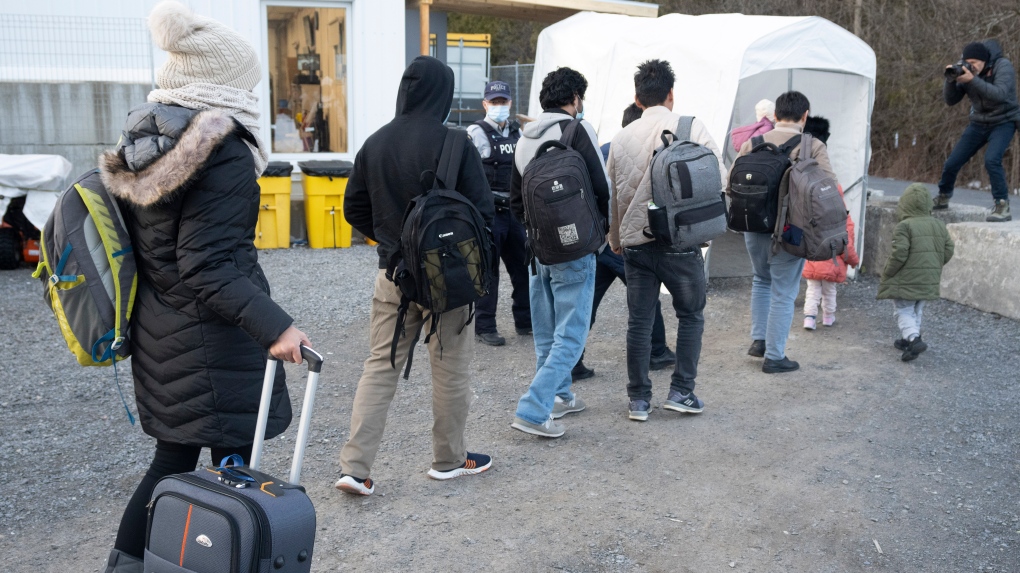
A deal Canada struck this year to stem the flow of asylum seekers entering from the U.S. was, at first glance, a quick success: Within days, the number of people caught at unofficial crossings along the border dwindled to a trickle.
But five months later, the overall number of people filing refugee claims in Canada has risen instead of falling. Many now come by air, while others sneak across the border and hide until they can apply for asylum without fear of being sent back, people working with migrants told Reuters.
The numbers show how hard it is for countries to shut the door on desperate people and the challenge unexpected numbers of asylum seekers can pose: In Toronto, hundreds slept on the streets this summer as they struggled to find beds.
"The basic reality is that closing a border doesn’t do anything to solve the need for protection," said Shauna Labman, an associate professor and acting director of the Human Rights Program at the University of Winnipeg.
"It only increases the desperation."
Canada prides itself on welcoming immigrants and aims to bring in a record half a million new permanent residents in 2025 to deal with an acute labor shortage. But it has sought to discourage those applying for asylum, chiefly through an agreement with the U.S. under which each country turns back asylum seekers.
Still, last year alone, more than 39,000 asylum seekers entered Canada via unofficial crossings - mostly into Quebec via a dirt path off Roxham Road in New York, prompting the province to complain it could not handle the arrivals. Asylum seekers are drawn by Canada's reputation for swifter processing and greater acceptance of asylum applications compared to the U.S.
In response, Canada and the United States in March amended their two-decade-old asylum-seeker pact, the Safe Third Country Agreement. The agreement now applies to the length of the countries' 4,000-mile land border, rather than just at ports of entry.
The expanded pact led to a dramatic drop in the number of people intercepted at informal crossings - down to double digits in April through July from 4,173 in March.
But overall, the number of asylum seekers entering Canada has surged. The total number of refugee claims made in Canada rose in July to 12,010 - the highest monthly total since at least January 2017 - and up from 10,120 in March, according to data from the immigration, refugees and citizenship department.
DEMAND FOR SAFETY
Some of the higher numbers are being driven by more people filing refugee claims at airports or local immigration department offices - often days, weeks or months after arriving in the country, government data shows.
People applying at airports comprised about a third of all refugee claims made in July, up from about 16 per cent in March. Those filing claims at immigration offices accounted for about 54 per cent of July's total, up from about a third in March. The top five countries that claimants came from in the first half of the year were Mexico, Haiti, Turkey, Colombia and India - though the numbers include those who applied before the expanded U.S. pact.
At least part of the reason for the latest influx is that Canada is among a shrinking group of countries seen as offering safe harbor while pressures of war, climate change and human rights violations force a greater number to flee, some migrant experts say.
The European Union, for example, recently introduced an asylum seeker pact allowing nations to more quickly send back some migrants. Britain's government is pushing forward on a law making it easier to send asylum seekers to Rwanda, while U.S. President Joe Biden's administration has introduced a rule making it harder for migrants to receive asylum if they cross U.S. borders illegally.
"If you’re a person who’s trying to make this set of decisions, then Canada becomes a more likely option," said Craig Damian Smith, a research affiliate at the Centre for Refugee Studies at York University.
Canada's immigration minister was not available for an interview.
"The world is facing unprecedented flows of migrants and refugees, and Canada is not immune to these trends," Remi Lariviere, a spokesperson for the department, said in a statement.
Lariviere said Canada amended the deal with the U.S. to address "irregular" crossings and that the expansion "does not mean that claims for asylum will not be made in Canada at all."
'BAD ACTORS'
People working with migrants say some of the people filing claims days or weeks after they arrive in Canada are hoping to skirt a clause in the expanded agreement with the U.S. that says any asylum seeker apprehended within two weeks of crossing the border will be turned back unless they meet a narrow exemption.
That has prompted some to cross over undetected, sometimes with a smuggler's help, and hide until the two-week period elapses.
The Refugee Centre in Montreal says it helped four families in one day last week who had been in hiding for a fortnight after crossing overland into the country.
"Unfortunately this is not a very safe avenue for them," Executive Director Abdulla Daoud told Reuters. "It promotes bad actors who take advantage of these individuals."
At the FCJ Refugee Centre in Toronto, about 20 per cent to 30 per cent of recent arrivals say they crossed into Canada undetected and hid with a smuggler's help, Executive Director Loly Rico said.
Reuters spoke with 10 people seeking refugee status who recently arrived in Toronto, Canada's largest city. They came from Sudan, Uganda and Mexico, among other places. All arrived by plane, with valid visas in hand. Some filed refugee claims days or weeks after their arrival.
Though they left for reasons ranging from domestic violence to war, the common draw for all was Canada's reputation for protecting human rights and providing refuge.
"It is the first country that I thought about," said Hana Bakhit. The 35-year-old from war-torn Sudan says she applied for a visitor’s visa in May, flew to Canada in July and filed a refugee claim two weeks later.
She has been sleeping in a mosque and a church, calling Toronto’s central shelter daily for a bed, only to be told there are none available. Still, she considers herself lucky to be in Canada.
With Canada's land border largely closed off, the asylum system now favours people like Bakhit who can get a visa and plane ticket, refugee lawyer Maureen Silcoff said.
"Some of the most vulnerable people remain barred from accessing Canada’s system and I think we have to reflect on the inequity of that development," Silcoff said.
Grace Nanziri, 42, was among those with the comparative privilege of being able to get a visa and flight ticket: she applied for a Canadian visitor's visa when her LGBTQ advocacy made her a target in her home country, Uganda.
After waiting a year for the visa, she flew to Toronto in August - drawn by Canada's reputation of protecting human rights, she said.
"They wanted to kill me," she said. "That’s why I came to Canada."
(Reporting by Anna Mehler Paperny; Editing by Denny Thomas and Deepa Babington)
A deal Canada struck this year to stem the flow of asylum seekers entering from the U.S. was, at first glance, a quick success: Within days, the number of people caught at unofficial crossings along the border dwindled to a trickle.
But five months later, the overall number of people filing refugee claims in Canada has risen instead of falling. Many now come by air, while others sneak across the border and hide until they can apply for asylum without fear of being sent back, people working with migrants told Reuters.
The numbers show how hard it is for countries to shut the door on desperate people and the challenge unexpected numbers of asylum seekers can pose: In Toronto, hundreds slept on the streets this summer as they struggled to find beds.
"The basic reality is that closing a border doesn’t do anything to solve the need for protection," said Shauna Labman, an associate professor and acting director of the Human Rights Program at the University of Winnipeg.
"It only increases the desperation."
Canada prides itself on welcoming immigrants and aims to bring in a record half a million new permanent residents in 2025 to deal with an acute labor shortage. But it has sought to discourage those applying for asylum, chiefly through an agreement with the U.S. under which each country turns back asylum seekers.
Still, last year alone, more than 39,000 asylum seekers entered Canada via unofficial crossings - mostly into Quebec via a dirt path off Roxham Road in New York, prompting the province to complain it could not handle the arrivals. Asylum seekers are drawn by Canada's reputation for swifter processing and greater acceptance of asylum applications compared to the U.S.
In response, Canada and the United States in March amended their two-decade-old asylum-seeker pact, the Safe Third Country Agreement. The agreement now applies to the length of the countries' 4,000-mile land border, rather than just at ports of entry.
The expanded pact led to a dramatic drop in the number of people intercepted at informal crossings - down to double digits in April through July from 4,173 in March.
But overall, the number of asylum seekers entering Canada has surged. The total number of refugee claims made in Canada rose in July to 12,010 - the highest monthly total since at least January 2017 - and up from 10,120 in March, according to data from the immigration, refugees and citizenship department.
DEMAND FOR SAFETY
Some of the higher numbers are being driven by more people filing refugee claims at airports or local immigration department offices - often days, weeks or months after arriving in the country, government data shows.
People applying at airports comprised about a third of all refugee claims made in July, up from about 16 per cent in March. Those filing claims at immigration offices accounted for about 54 per cent of July's total, up from about a third in March. The top five countries that claimants came from in the first half of the year were Mexico, Haiti, Turkey, Colombia and India - though the numbers include those who applied before the expanded U.S. pact.
At least part of the reason for the latest influx is that Canada is among a shrinking group of countries seen as offering safe harbor while pressures of war, climate change and human rights violations force a greater number to flee, some migrant experts say.
The European Union, for example, recently introduced an asylum seeker pact allowing nations to more quickly send back some migrants. Britain's government is pushing forward on a law making it easier to send asylum seekers to Rwanda, while U.S. President Joe Biden's administration has introduced a rule making it harder for migrants to receive asylum if they cross U.S. borders illegally.
"If you’re a person who’s trying to make this set of decisions, then Canada becomes a more likely option," said Craig Damian Smith, a research affiliate at the Centre for Refugee Studies at York University.
Canada's immigration minister was not available for an interview.
"The world is facing unprecedented flows of migrants and refugees, and Canada is not immune to these trends," Remi Lariviere, a spokesperson for the department, said in a statement.
Lariviere said Canada amended the deal with the U.S. to address "irregular" crossings and that the expansion "does not mean that claims for asylum will not be made in Canada at all."
'BAD ACTORS'
People working with migrants say some of the people filing claims days or weeks after they arrive in Canada are hoping to skirt a clause in the expanded agreement with the U.S. that says any asylum seeker apprehended within two weeks of crossing the border will be turned back unless they meet a narrow exemption.
That has prompted some to cross over undetected, sometimes with a smuggler's help, and hide until the two-week period elapses.
The Refugee Centre in Montreal says it helped four families in one day last week who had been in hiding for a fortnight after crossing overland into the country.
"Unfortunately this is not a very safe avenue for them," Executive Director Abdulla Daoud told Reuters. "It promotes bad actors who take advantage of these individuals."
At the FCJ Refugee Centre in Toronto, about 20 per cent to 30 per cent of recent arrivals say they crossed into Canada undetected and hid with a smuggler's help, Executive Director Loly Rico said.
Reuters spoke with 10 people seeking refugee status who recently arrived in Toronto, Canada's largest city. They came from Sudan, Uganda and Mexico, among other places. All arrived by plane, with valid visas in hand. Some filed refugee claims days or weeks after their arrival.
Though they left for reasons ranging from domestic violence to war, the common draw for all was Canada's reputation for protecting human rights and providing refuge.
"It is the first country that I thought about," said Hana Bakhit. The 35-year-old from war-torn Sudan says she applied for a visitor’s visa in May, flew to Canada in July and filed a refugee claim two weeks later.
She has been sleeping in a mosque and a church, calling Toronto’s central shelter daily for a bed, only to be told there are none available. Still, she considers herself lucky to be in Canada.
With Canada's land border largely closed off, the asylum system now favours people like Bakhit who can get a visa and plane ticket, refugee lawyer Maureen Silcoff said.
"Some of the most vulnerable people remain barred from accessing Canada’s system and I think we have to reflect on the inequity of that development," Silcoff said.
Grace Nanziri, 42, was among those with the comparative privilege of being able to get a visa and flight ticket: she applied for a Canadian visitor's visa when her LGBTQ advocacy made her a target in her home country, Uganda.
After waiting a year for the visa, she flew to Toronto in August - drawn by Canada's reputation of protecting human rights, she said.
"They wanted to kill me," she said. "That’s why I came to Canada."
(Reporting by Anna Mehler Paperny; Editing by Denny Thomas and Deepa Babington)
Key indicators are forecasting Canadians may be on the brink of entering a fall COVID-19 wave.
The past month has seen an increase in positive test cases, a rise in COVID-19 hospitalizations and rising virus levels in wastewater across the country.
The highly mutated new variant BA.2.86 was also detected in Canada for the first time on Tuesday.
Ottawa's medical officer of health Vera Etches said current higher COVID-19 levels are expected to continue to rise in the coming weeks.
These early warning signs have some wondering whether COVID-19 is making a comeback, and if it is, how bad it will be.
CBC Ottawa spoke with public health experts to get some answers.
"Right now it accounts for about 60 per cent of the current positives we're seeing so that's what's driving this late summer wave," said Dr. Gerald Evans, chair of the division of infectious diseases at Queen's University in Kingston, Ont.
"A lot of people haven't had a booster for about 12 months and have lost a fair degree of the immunity that might have protected them from getting infected."
Most of us who've been watching carefully expected there to be a rise.- Dr. Fahad Razak
Ottawa's medical officer of health Vera Etches said Thursday it's not yet clear that subvariants are driving the increase.
"It's more that we're in close contact with each other," she said.
This week on Cross Country Checkup, our Ask Me Anything focuses on the new COVID-19 variant BA.2.86 and what's next for masking and booster shots. What questions do you have? Fill out the details on this form to get your questions in early.
Dr. Fahad Razak, former scientific director of Ontario's COVID-19 Science Advisory Table, explained COVID-19 infections have yet to settle into a seasonal pattern like we now expect from RSV and influenza. He said this summer's rise echoes rises that have occurred in earlier years of the pandemic.
"Most of us who've been watching carefully expected there to be a rise," Razak said. "We know that as the virus continues to evolve and mutate there will be these periodic rises that occur."
Subvariant EG.5 is just one of several variants in Ottawa's wastewater right now, according to Tyson Graber, co-lead investigator of the wastewater monitoring project in Ottawa.
Graber has seen a gradual increase in most of these variants in the wastewater over the past four weeks but EG.5 is outpacing the other variants.
"That's indicative of a COVID-19 wave happening in the city and unsurprisingly that is followed by an increase in hospitalizations that we're seeing now in Ottawa," Graber said.
Ottawa Public Health says 177 new COVID-19 cases were reported the week of Aug. 22. (CBC)
This variant has only been identified in a few countries around the world, but its high number of mutations still has health experts concerned.
"This virus has 30 mutations or changes to [its] spike protein, which is the part the antibodies try to grab to take out the virus," explained Dr. Peter Lin, director of primary care initiatives at the Canadian Heart Research Centre in Toronto.
"So the antibodies we made from the vaccine or previous infections may not be able to grab the spike protein as easily, which means the virus could slip past our defences."
Everybody is sounding the alarm bells again.- Dr. Peter Lin
Omicron was the last variant that appeared with this many mutations.
"We're kind of in the same situation," Lin said. "Everybody is sounding the alarm bells again."
Not all are sounding the alarm bells quite yet.
"I haven't seen evidence yet that it has an ability to out compete the other viruses out there. If it can't do that, then it's just going to fizzle out," Evans said.
Health Canada told CBC News Monday it is considering three new vaccines specifically designed to target the subvariant XBB.1.5, which like EG.5, is also part of the Omicron family.
While it is too early to say whether the new vaccines will be able to target BA.2.86, Lin said there is some hope.
Variant BA.2.86 has not yet been detected in Ottawa's wastewater, but Graber expects it will show up within the next month.
Health experts say masking, staying up to date with vaccinations and staying home when showing symptoms will all be effective in slowing the spike of the wave. (David Horemans/CBC)
Are we entering another wave?
There are different opinions on whether the country is entering a new COVID-19 wave, or simply a rise in cases.
Graber said the increase in COVID-19 viruses he is seeing in Ottawa's wastewater does indicate the beginning of another wave.
Based on the waste water data alone, we probably won't be done with this wave until at least October or November.- Tyson Graber
"It's a foregone conclusion that we are now in a late summer, early fall wave, and that this wave will continue for at least the next couple of months," he said, adding the increase he's seeing is not as steep as the early days of previous waves have been.
"Based on the waste water data alone, we probably won't be done with this wave until at least October or November."
Researchers measure and share the amount of novel coronavirus in Ottawa's wastewater. The most recent data is from Aug. 27, 2023. ( (613covid.ca))
Graber said there are a handful of variables that could change this forecasted trajectory, including the coming return to school, an increase in indoor activities, waning immunity, and new variants coming through the door.
Razak does not expect this wave will cause severe disruptions for most Canadians.
"For most people the chances they'll get really sick are low," he said. "This is not the crisis we faced in year one, two, or three of the pandemic, but it can still be disruptive. Preventative steps are prudent."
For Evans, the current increase in COVID-19 cases does not yet indicate we're entering another wave.
"The curve ball is BA.2.86," he said. "If it were to really emerge and have a growth advantage, then all bets are off and we might actually see a subsequent pandemic wave."
When should I get my next booster?
Most experts are advising to hold off on getting a booster until the new vaccines have arrived, which experts say are expected mid-fall.
"The bivalent available now is not going to work very well so that's why we should wait for the new one," Lin said.
"The new vaccines made by Pfizer, Moderna and Novavax are designed to go after XBB spike protein, because that was the main virus for most of the year. EG.5 is the son of XBB, they have a lot of things in common, and so the hope is that it will work on that version."
Evans said the same.
You need a booster. If everybody just abandons getting boosters going forward there's a high probability we'll return to a more susceptible population- Dr. Gerald Evans
"If you're young and healthy and overdue, just wait until the new boosters come out," he said.
"But if you're somebody of substantial risk and you're due for your booster, you should probably get it now. Even current vaccines will protect you from acute infection for a good month or two."
Generally healthy people who have kept up to date with their boosters will likely have developed a hybrid immunity. Evans specified this doesn't mean people who have updated boosters are immune to new variants, but it does mean their infections will be less severe, so they can afford to hold off.
Health Canada is reviewing three applications for new COVID-19 vaccine formulations to address new subvariants in circulation. (Lars Hagberg/Canadian Press)
Despite this, he said continued vaccination is still important.
"You need a booster. If everybody just abandons getting boosters going forward there's a high probability we'll return to a more susceptible population."
Evans said Health Canada will likely only approve the new vaccines for children 12 and over but that kids between five and 12 years old are able to get the bivalent booster currently available.
What does this mean for back to school?
Health experts expect the return to school will bring an increase in viral spread, as it has in previous years.
"We'll see the usual pattern of germ swap once kids go back to school," Lin said. "But this time we have new variants. All of this virus swapping will happen before new vaccines are available."
But this could come with some advantages, Evans said, explaining the return to school will also cause an immediate rise in the common cold, which can offer a small amount of protection against COVID-19 infections.
Evans said getting children boosted before going back to class would help to reduce the spread, and advised parents to keep kids home if they're showing any symptoms.
"It is important as children come together in schools to do that check every day [for respiratory symptoms], and stay home when you're sick," Etches said.
Experts anticipate the back-to-school season will mean increased circulation of RSV, influenza and COVID-19. (James Arthur Gekiere/Belga Mag/AFP/Getty Images)
Any chance of mask mandates or lockdowns?
Health experts consulted for this piece agreed that a fall COVID-19 wave would be unlikely to induce mask mandates or lockdowns.
"I don't think there's anything that we're seeing right now that would suggest we should go into lockdown or anything like we've seen in the past, in terms of early pandemic public health measures.," Graber said.
Razak agreed.
"Unless there is significant change in the nature of the virus, I think it's very unlikely a mask mandate will be something any government in North America or Europe considers," he said. "A mask mandate at this point would do more harm than good."
Razak did distinguish between general mask mandates and those for higher risk environments like hospitals, adding that the latter is something he hopes provinces will consider.
As it is, Razak said he expects mask use to be very low this winter.
"There is a sense that the pandemic has passed," Razak said. "This is going to be a very difficult challenge for public health leadership to get people to get vaccinated."
All health experts consulted assured masking and vaccination continue to be the best ways to reduce the spread of the virus.
"Regardless of the variant, there are things we can do to decrease spread of respiratory illness," Etches said.
"Wearing a mask as we get back to work or school is one thing we can do to help decrease transmission, keeping our hands clean, not touching our face with unclean hands, these are things to remind ourselves to practice again as we head into the fall."

 Detroit Lions at Kansas City Chiefs (-6.5)
 Carolina Panthers at Atlanta Falcons (-3.5)
 Cincinnati Bengals (-2.5) at Cleveland Browns
 Jacksonville Jaguars (-5) at Indianapolis Colts
 Tampa Bay Buccaneers at Minnesota Vikings (-6)
 Tennessee Titans at New Orleans Saints (-3)
 San Francisco 49ers (-2.5) at Pittsburgh Steelers
 Arizona Cardinals at Washington Commanders (-7)
 Houston Texans at Baltimore Ravens (-10)
 Green Bay Packers at Chicago Bears (-1)
 Las Vegas Raiders at Denver Broncos (-3.5)
 Philadelphia Eagles (-4) at New England Patriots
 Miami Dolphins @ Los Angeles Chargers (-3)
 Los Angeles Rams at Seattle Seahawks (-5)
 Dallas Cowboys (-3.5) at New York Giants
 Buffalo Bills (-2.5) at New York Jets