Rechercher dans ce blog

Tuesday, September 28, 2021

B.C. records 652 new cases of COVID-19 and 2 more deaths - CBC.ca

B.C. health officials announced 652 new cases of COVID-19 and two more deaths on Tuesday.

In a written statement, the provincial Ministry of Health said there are currently 5,992 active cases of people infected with the novel coronavirus in B.C.

A total of 316 people are in hospital, with 141 in intensive care.

Overall hospitalizations, which typically lag behind spikes and dips in new cases, are up by three per cent from last Tuesday, when 307 people were in hospital with the disease and about 98.7 per cent from a month ago when 159 people were in hospital.

The number of patients in intensive care is down by about 9.6 per cent from 156 a week ago, but up by 67.8 per cent from a month ago when 84 people were in the ICU.

The provincial death toll from COVID-19 is now 1,942 lives lost out of 185,432 confirmed cases to date.

The regional breakdown of new cases is as follows: 

  • 219 new cases in Fraser Health, which has 2,249 total active cases.
  • 162 new cases in Interior Health, which has 1,176 total active cases.
  • 117 new cases in Northern Health, which has 929 total active cases.
  • 82 new cases in Island Health, which has 677 total active cases.
  • 70 new cases in Vancouver Coastal Health, which has 903 total active cases. 
  • There are two new cases among people who reside outside of Canada, a group which has 58 total active cases.

There  are a total of 22 active outbreaks in assisted living and long-term care.

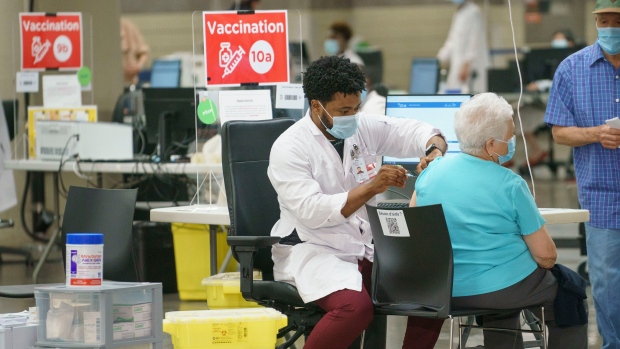
As of Tuesday, 87.8 per cent of those 12 and older in B.C. have received their first dose of a COVID-19 vaccine and 80.6 per cent a second dose.

From Sept. 20 to 26, people who were not fully vaccinated accounted for 72.2 per cent of cases and from Sept. 13 to 26, they accounted for 82.5 per cent of hospitalizations, according to the province. After factoring for age, people not vaccinated are 26.7 times more likely to be hospitalized than those who are fully vaccinated, it said.

So far, 7.8 million doses of COVID-19 vaccine have been administered, including 3.7 million second doses.

New restrictions for eastern Fraser Valley 

New regional public health orders have been introduced for Abbotsford, Chilliwack, Hope, Mission and Agassiz-Harrison.

Officials said those communities are seeing a surge in the number of people diagnosed with COVID-19 — particularly those who are not vaccinated — and the caseload is putting a strain on regional hospitals.

Private gatherings in that area will now be limited to five additional people or one additional household. Outdoor gatherings are limited to 10 people — unless all of the participants are fully vaccinated. Organized events are limited to 10 people inside or 50 people outside, unless everyone is fully vaccinated.

Places in the area that require a vaccine card will now require proof of two doses, effective immediately.

Vancouver school district extends mask mandate

In August, the Ministry of Education updated COVID-19 safety guidelines for the 2021/2022 school year, which included mandatory masks in indoor spaces for students in Grades 4 to 12. However, the Vancouver school district will be making masks mandatory for all students from kindergarden to Grade 12. 

The school board voted unanimously to make the change.

It is unclear when the mandate will go into effect, however, the district says more information will be made available to parents and staff in coming days. 

Adblock test (Why?)


B.C. records 652 new cases of COVID-19 and 2 more deaths - CBC.ca
Read More

COVID-19 in Sask.: 10 more deaths, another hospitalizations record - CBC.ca

Saskatchewan has recorded one of its worst days in the COVID-19 pandemic, breaking multiple pandemic-related records on Tuesday. 

The province reported an increase of 22 new hospitalizations, meaning there are now 311 people with COVID-19 in Saskatchewan's hospitals. That's the first time that more than 300 people have been hospitalized in the province. 

The province also posted a record number of people in the province's intensive care units (ICU). That figure has reached 65 as of Tuesday. 

Even more concerning is a piece of information contained in the hospitalizations tab of Saskatchewan's COVID-19 dashboard. Six of the province's health zones no longer have any available ICU beds. 

The zones include the far northwest, far north central, far northeast, northwest, central west and southeast. 

WATCH | Sask. doctor talks about unvaccinated COVID-19 patient's dying regrets

Regina infectious disease specialist Dr. Alex Wong talks about an unvaccinated patient's dying regrets

Dr. Alex Wong has been on the front lines of the fight against COVID-19 in Saskatchewan and is talking about an unvaccinated patient's dying regrets. 2:05

More deaths and more cases

The province reported 10 more COVID-19-related deaths on Tuesday.

Since the beginning of the pandemic, 682 people in the province are known to have died of COVID-19.

Saskatchewan also reported 449 new cases of COVID-19. 

According to the province's dashboard, 23 per cent, or 103 of the 449 new cases, were among children under the age 12. 

The new cases were reported in the following health zones:

  • Far northwest, 20.
  • Far north central, 2.
  • Far northeast, 23.
  • Northwest, 72.
  • North central, 38.
  • Northeast, 10.
  • Saskatoon, 103.
  • Central west, 11.
  • Central east, 15.
  • Regina, 48.
  • Southwest, 22.
  • South central, 27.
  • Southeast, 25.

The province reported administering 648 new doses of COVID-19 vaccines. There are now 289 more people that are now fully vaccinated while 359 people received their first jab. 

As of Tuesday, 71.71 per cent of the eligible population in Saskatchewan is fully vaccinated and 80.39 per cent has received at least one dose. 

Adblock test (Why?)


COVID-19 in Sask.: 10 more deaths, another hospitalizations record - CBC.ca
Read More

Albertans dying from COVID-19 at more than three times the average Canadian rate - CBC.ca

Albertans are dying from COVID-19 at more than three times the average Canadian rate as the province is hammered by the pandemic's devastating fourth wave.

It has now been 12 days since the provincial government first introduced a slew of new public health measures and eight days since many went into effect, including the restrictions exemption program — Alberta's version of a vaccine passport system.

Yet the number of new cases continues to grow, and COVID-19 patients — most of them unvaccinated — continue to fill Alberta hospitals. In the seven-day stretch starting Sept. 20, 62 Albertans have died due to the disease. 

Nationally, the average COVID-19 death rate per 100,000 people for the last seven days was 0.7, according to online aggregate data from Monday. Alberta's rate was 2.3, while Saskatchewan's was 2.6.

Over the last 14 days, the national average of COVID-19 deaths was 1.2, with 4.1 for Alberta and 4.0 for Saskatchewan.

The two provinces bottom out the country for vaccination coverage. According to CBC's vaccination tracker, 82.6 per cent of Alberta's eligible population had a first dose compared to the Canadian average of 87 per cent. 

For two doses, it was 73.5 per cent compared to a national coverage of 80.5 per cent.

Alberta also continues to lead the country in active cases, accounting for almost half the active cases in Canada, despite only having about one-tenth of the nation's total population. The province had 21,307 active cases as of Monday.

New daily case counts have regularly surpassed 1,500 since mid-September. Over the past weekend, Alberta reported 5,181 new cases.

The health-care system is at a breaking point as Alberta Health Services scrambles to create more intensive care capacity in hospitals across the province.

As of Monday, there were 1,063 people in hospital with COVID-19, including 265 of those patients in intensive care.

There were 370 ICU beds in Alberta as of Monday, including 197 surge spaces. Capacity hit 84 per cent of surge capacity or 180 per cent of the baseline.

A 52-page critical care triage protocol developed by AHS describes how the health-care system will cope if intensive care units no longer have the resources to care for every critically ill patient.

Fire-breaker restrictions

Premier Jason Kenney rejected calls for a "hard lockdown" during an appearance on a radio program Sunday.

That was the same day the province's former chief medical officer of health co-signed a letter sent to the current health minister strongly recommending additional measures in the province, as the pandemic's fourth wave continues to strain hospital capacity.

On Monday, the Alberta Medical Association (AMA) released a statement asking the province to institute "significant and immediate" public health measures as a "fire-breaker" to aggressively control COVID-19 cases and protect the health-care system.

AMA president Dr. Paul Boucher said Monday that increasing the vaccination rate will help in the future but will not make a difference in facing down this wave of the pandemic.

"What we are calling for exactly is a tight lockdown again, like we saw last spring, in order to allow case numbers to fall," he said Monday.

"We're deep in it now — nostril or two above water — and dangerously close to having to make some very difficult decisions."

Prime Minister Justin Trudeau addressed the situation Tuesday, telling reporters that he hoped to speak with Kenney the following day.

"Over the past week, officials at all levels of government have been engaged with their counterparts in Alberta and in Saskatchewan to offer any and all support we can," he said.

Adblock test (Why?)


Albertans dying from COVID-19 at more than three times the average Canadian rate - CBC.ca
Read More

Albertans dying from COVID-19 at more than three times the average Canadian rate - CBC.ca

Albertans are dying from COVID-19 at more than three times the average Canadian rate as the province is hammered by the pandemic's devastating fourth wave.

It has now been 12 days since the provincial government first introduced a slew of new public health measures and eight days since many went into effect, including the restrictions exemption program — Alberta's version of a vaccine passport system.

Yet the number of new cases continues to grow, and COVID-19 patients — most of them unvaccinated — continue to fill Alberta hospitals. In the seven-day stretch starting Sept. 20, 62 Albertans have died due to the disease. 

Nationally, the average COVID-19 death rate per 100,000 people for the last seven days was 0.7, according to online aggregate data from Monday. Alberta's rate was 2.3, while Saskatchewan's was 2.6.

Over the last 14 days, the national average of COVID-19 deaths was 1.2, with 4.1 for Alberta and 4.0 for Saskatchewan.

The two provinces bottom out the country for vaccination coverage. According to CBC's vaccination tracker, 82.6 per cent of Alberta's eligible population had a first dose compared to the Canadian average of 87 per cent. 

For two doses, it was 73.5 per cent compared to a national coverage of 80.5 per cent.

Alberta also continues to lead the country in active cases, accounting for almost half the active cases in Canada, despite only having about one-tenth of the nation's total population. The province had 21,307 active cases as of Monday.

New daily case counts have regularly surpassed 1,500 since mid-September. Over the past weekend, Alberta reported 5,181 new cases.

The health-care system is at a breaking point as Alberta Health Services scrambles to create more intensive care capacity in hospitals across the province.

As of Monday, there were 1,063 people in hospital with COVID-19, including 265 of those patients in intensive care.

There were 370 ICU beds in Alberta as of Monday, including 197 surge spaces. Capacity hit 84 per cent of surge capacity or 180 per cent of the baseline.

A 52-page critical care triage protocol developed by AHS describes how the health-care system will cope if intensive care units no longer have the resources to care for every critically ill patient.

Fire-breaker restrictions

Premier Jason Kenney rejected calls for a "hard lockdown" during an appearance on a radio program Sunday.

That was the same day the province's former chief medical officer of health co-signed a letter sent to the current health minister strongly recommending additional measures in the province, as the pandemic's fourth wave continues to strain hospital capacity.

On Monday, the Alberta Medical Association (AMA) released a statement asking the province to institute "significant and immediate" public health measures as a "fire-breaker" to aggressively control COVID-19 cases and protect the health-care system.

AMA president Dr. Paul Boucher said Monday that increasing the vaccination rate will help in the future but will not make a difference in facing down this wave of the pandemic.

"What we are calling for exactly is a tight lockdown again, like we saw last spring, in order to allow case numbers to fall," he said Monday.

"We're deep in it now — nostril or two above water — and dangerously close to having to make some very difficult decisions."

Prime Minister Justin Trudeau addressed the situation Tuesday, telling reporters that he hoped to speak with Kenney the following day.

"Over the past week, officials at all levels of government have been engaged with their counterparts in Alberta and in Saskatchewan to offer any and all support we can," he said.

Adblock test (Why?)


Albertans dying from COVID-19 at more than three times the average Canadian rate - CBC.ca
Read More

Canada COVID-19 vaccinations: More than 80 per cent have received two doses - CTV News

TORONTO -- More than 80 per cent of eligible Canadians over the age of 12 have been fully vaccinated against COVID-19, according to CTV News’ coronavirus vaccination tracker.

The tracker tipped over the 80 per cent mark based on numbers reported by the provinces and territories on Monday.

Canada began vaccinating older Canadians and those most at risk of severe outcomes from the disease in mid-December 2020.

Despite a slow start to the national vaccine rollout due to shipment delays, Canada really began to ramp up its vaccination efforts in the spring.

By Tuesday morning, 80.14 per cent of the eligible population over the age of 12 had been fully vaccinated and 86.75 per cent had received one dose.

Canada is preparing to vaccinate children between the ages of five and 11 as well, but a vaccine hasn’t been approved for this age group by Health Canada yet. On Sept. 20, Pfizer said its vaccine safely worked in children in this age range and would request authorization for its use in Canada soon.

The dose for children is one-third the size of that given to adults.

By mid-September, the country had even paused its scheduled deliveries of COVID-19 vaccines because the provinces and territories already had enough supply to fully vaccinate all eligible people over the age of 12.

As a result, Canada is currently in talks with suppliers and other countries still in need of doses on a plan to donate excess doses of the Pfizer and Moderna vaccines. The federal government has already promised to donate 40 million doses it bought but can’t use from AstraZeneca, Johnson & Johnson, and the COVAX vaccine-sharing alliance.

Federal health officials continue to urge all eligible Canadians to get fully vaccinated as soon as possible to prevent further spread of the virus.

“The bottom line is that millions of people across Canada remain unvaccinated and at high risk of COVID-19 infection and severe illness outcomes,” chief public health officer Dr. Theresa Tam said during a press conference earlier this month.

With files from The Canadian Press 

Adblock test (Why?)


Canada COVID-19 vaccinations: More than 80 per cent have received two doses - CTV News
Read More

More than 17,000 Quebec health-care workers face suspension for refusing vaccine - CBC.ca

More than 17,000 health-care workers in Quebec will be suspended next month for refusing to be vaccinated against COVID-19, and now provincial officials are scrambling to fill in the gaps.

A spokesperson for Health Minister Christian Dubé told CBC on Monday that a total of 17,426 employees within Quebec's health-care network still haven't had their first dose.

Nearly half of those unvaccinated employees are front-line workers who are in direct contact with patients, the spokesperson said.

They will all be suspended Oct. 15 when the provincial decree that mandates all health-care workers be fully vaccinated kicks in.

Thousands more who've only received a first dose will also be off the job until they get the second.

Suspending that many workers at one time could be catastrophic, according to Kristina Hoare, a representative of the nurses' union in Montreal's West Island.

"It affects us because we're going to be missing staff in a system that's already not doing well," she said.

"Anxiety is through the roof and every other adjective that you can add to anxiety right now is how we're feeling as a whole."

The health authority in Laval has 800 workers who'll be suspended. CISSS de Laval deputy director Chantal Fiset says they're trying to convince unvaccinated workers to get the shot.

She says they've also called hundreds of retired workers to see if they can come back and help out, but she doesn't think that will work.

"We're not saying that we're 100 per cent sure that we'll hire 800 people, I cannot say that," Fiset said.  

Premier François Legault announced the mandatory vaccination policy in early September, saying anyone not adequately vaccinated by Oct. 15 will be suspended without pay.

The policy is the province's latest attempt to tame COVID-19 without imposing more restrictions on the public, with the premier's announcement coming just over a week after the implementation of the vaccine passport.

Public health experts have long called for mandatory vaccination for health-care workers, given the risk involved if there's an outbreak among vulnerable patients.

Adblock test (Why?)


More than 17,000 Quebec health-care workers face suspension for refusing vaccine - CBC.ca
Read More

North Korea accuses U.S. of keeping ‘hostile policy’ as it tests more weapons - Global News

North Korea on Monday accused the United States of keeping up its “hostile policy” and demanded the Biden administration permanently end joint military exercises with South Korea even as it continued its recent streak of weapons tests apparently aimed at pressuring Washington and Seoul over slow nuclear diplomacy.

North Korean Ambassador Kim Song’s comments on the last day of the U.N. General Assembly’s annual high-level meeting came shortly after South Korea’s military said the North fired an unidentified projectile into its eastern waters.

The North’s latest test, which followed two previous rounds of missile tests this month, indicated the country is returning to its tried-and-true technique of mixing weapons demonstrations and peace offers to wrest concessions amid long-stalled negotiations over its nuclear weapons program.

Seoul’s Joint Chiefs of Staff didn’t immediately say what the North launched in its latest test, which took place early Tuesday on the Korean Peninsula, or how far the weapon flew.

Read more: North Korea fires 2 ballistic missiles into Sea of Japan, South Korea says

Speaking through a translator, Kim justified North Korea’s development of a “war deterrent” as a necessity to defend against U.S. threats, and also accused South Korea of betraying inter-Korean peace agreements by prioritizing its Western ally over “national harmony.”

He demanded that the United States “permanently” stop its military exercises with South Korea, which the North has traditionally described as invasion rehearsals, and end the deployment of U.S. strategic weapons if it wants to end the 1950-53 Korean War and “is really desirous of peace and reconciliation on the Korean Peninsula.”

“The possible outbreak of a new war on the Korean Peninsula is contained not because of the U.S.’s mercy on the DPRK, it is because our state is growing a reliable deterrent that can control the hostile forces in an attempted military invasion,” Kim said, referring to North Korea by the abbreviation of its formal name, the Democratic People’s Republic of Korea.

The Biden administration recently announced that it terminated the longest war in Afghanistan after 20 years, Kim said, “but the U.S. is still ignoring the reality that the Korean War has not ended for over 70 years.”

Click to play video: 'Biden names U.S. special envoy to North Korea' Biden names U.S. special envoy to North Korea
Biden names U.S. special envoy to North Korea – May 21, 2021

Kim cited “military threats and hostile acts” that the DPRK has faced from the U.S. every day since it was founded after the 1950-53 Korean war when the country was divided.

North Korea mainly uses the term “hostile policy” to refer to U.S.-led sanctions over its nuclear weapons program and the joint U.S.-South Korea military drills.

“If (the United States) is really desirous of peace and reconciliation on the Korean Peninsula, they should take the first step towards giving up its hostile policy against the DPRK by stopping permanently the joint military exercises and the deployment of all kinds of strategic weapons which are leveled at the DPRK in and around the Korean Peninsula,” Kim said.

The United States keeps about 28,000 troops in South Korea to help deter potential aggression from North Korea. The allies say their drills are defensive in nature, but they have canceled or downsized them in recent years to create space for diplomacy or in pandemic response.

Read more: North Korea hails new ballistic missiles amid nuclear standoff with U.S.

North Korea’s nuclear program has seemed to recede in attention at this year’s General Assembly in the face of new and broader challenges like COVID-19 and rising U.S.-China tensions, and the meeting ended without meaningful new proposals to break the diplomatic stalemate.

But North Korea usually hates being ignored. After months of relative quiet, the country this month tested new cruise missiles it eventually plans to arm with nuclear warheads and launched ballistic missiles from a train. It then offered to improve relations with South Korea if certain conditions are met.

Analysts say North Korean leader Kim Jong Un is using the South’s desire for inter-Korean engagement to pressure Seoul to extract concessions from the Biden administration on his behalf as he renews an attempt to leverage his nuclear weapons for badly needed economic and security benefits.

In their speeches at the General Assembly last week, both President Joe Biden and South Korean President Moon Jae-in expressed hopes to diplomatically resolve the standoff with North Korea while sidestepping the fresh tensions created by the North’s latest tests.

Biden, whose pullout from Afghanistan underscored a broader shift in U.S. focus from counterterrorism and so-called rogue states like North Korea and Iran to confronting a rising authoritarian superpower in China, said his administration would seek “serious and sustained diplomacy” to denuclearize the Korean Peninsula.

Click to play video: 'North Korea missiles test-launched as seen in photos from state TV' North Korea missiles test-launched as seen in photos from state TV
North Korea missiles test-launched as seen in photos from state TV – Mar 26, 2021

Moon, who wants North Korea to remain a priority in Washington, made a more ambitious push to break the diplomatic deadlock, calling for the leaders of the Koreas, the United States and China to declare an end to the Korean War. The conflict, in which North Korea and ally China faced off against South Korea and U.S.-led U.N. forces, ended with an armistice, but there was never a peace treaty.

North Korea rebuffed Moon’s offer last week, saying such a declaration would end up being a “smokescreen” to cover up U.S. hostility. But Kim Yo Jong, the influential sister of the North Korean leader, said her country will take steps to repair ties with the South, and may even discuss another summit between their leaders — if Seoul drops its hostility and public criticism about North Korean military developments.

Nuclear negotiations have stalled since the collapse of a meeting between Kim Jong Un and former President Donald Trump in February 2019, when the Americans rejected the North’s demands for a major removal of U.S.-led sanctions over its nuclear weapons program in exchange for dismantling an aging nuclear facility.

Kim Jong Un in recent political speeches has vowed to bolster his nuclear deterrent in face of U.S. pressure. His government has so far rejected the Biden administration’s offer to resume talks without preconditions, saying that Washington must abandon its hostile policy first.

In Monday’s address, ambassador Kim said, “I am convinced that a good prospect will be opened or the DPRK-US relations and the inter-Korean relations if the U.S. refrains from threatening the DPRK and gives up its hostility towards it.”

© 2021 The Canadian Press

Adblock test (Why?)


North Korea accuses U.S. of keeping ‘hostile policy’ as it tests more weapons - Global News
Read More

Lupus and other autoimmune diseases strike far more women than men. Now there's a clue why - CTV News

WASHINGTON - Women are far more likely than men to get autoimmune diseases, when an out-of-whack immune system attacks their own bodies -...